

The 'At One' Moment
Understanding the differences between the Festivals of Passover and Atonement

In church yesterday, the pastor taught on the Day of Atonement.
It got me thinking about two questions:
How can you explain the concept of ‘atonement’ in simple terms?
How is the Day of Atonement different from the Feast of Passover?
Many evangelical pastors conflate (confuse?) the Passover and the Atonement, portraying them as the same, as in ‘God forgives your sins through sacrifice.’
Yet, the Passover and the Atonement are different in timing, nature, and essence.
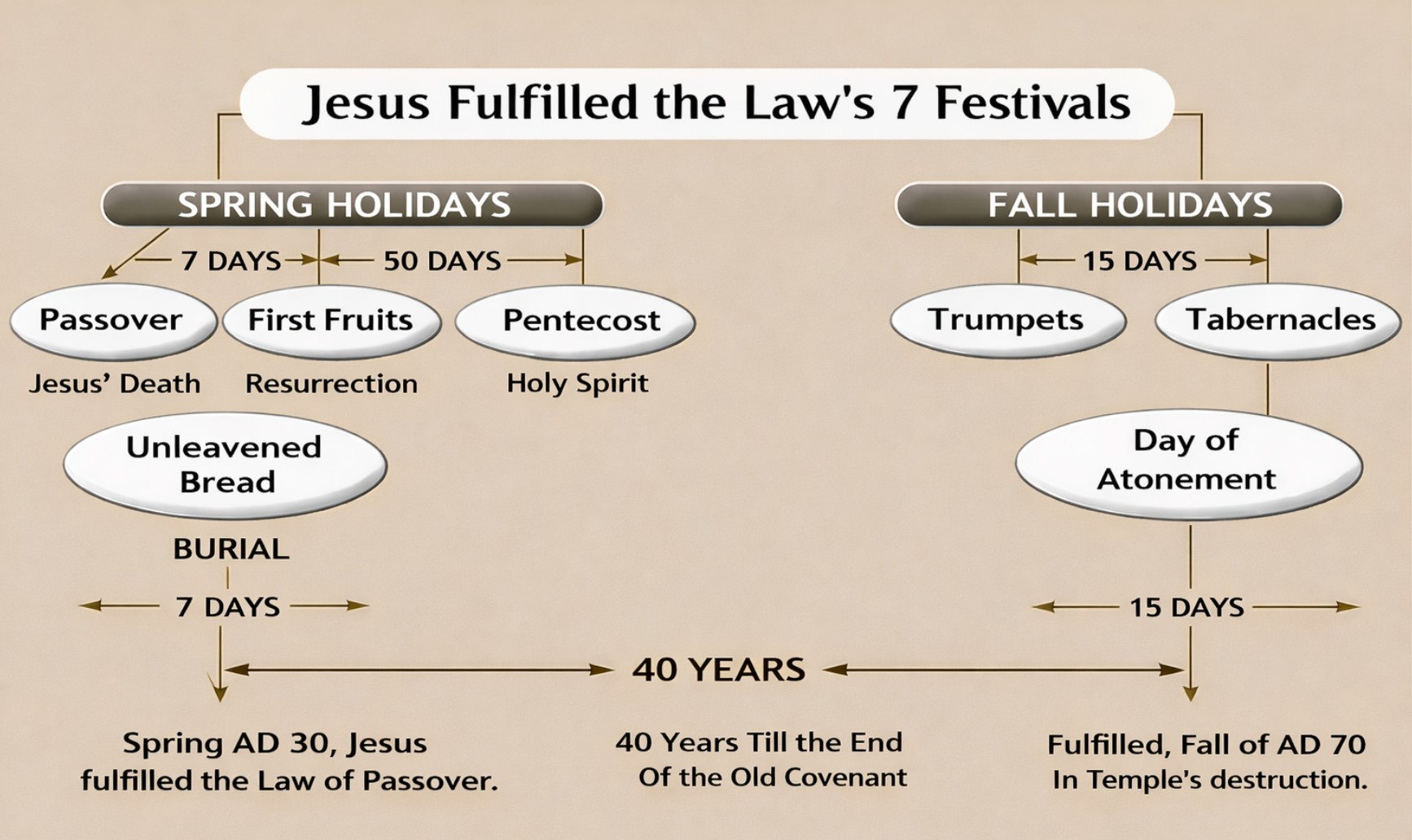
All seven Old Testament festivals in the Mosaic Law were designed to portray the Person and work of Yeshua, the Anointed One (Jesus, the Christ).
When Jesus came to earth, He fulfilled the Law completely, meaning the Festivals.
Jesus said to His disciples: ‘Do not think that I have come to abolish the Law or the Prophets; I have not come to abolish them but to fulfill them.’ - Matthew 5:17
Differences Between PASSOVER and ATONEMENT
The Passover (Pesach)
One lamb per family
Thousands of families, each in their own homes
Full family meal eaten together
Preceded by a week of removing leaven from individual homes
Week-long festival (Passover + Unleavened Bread)
Spring festival — March / April
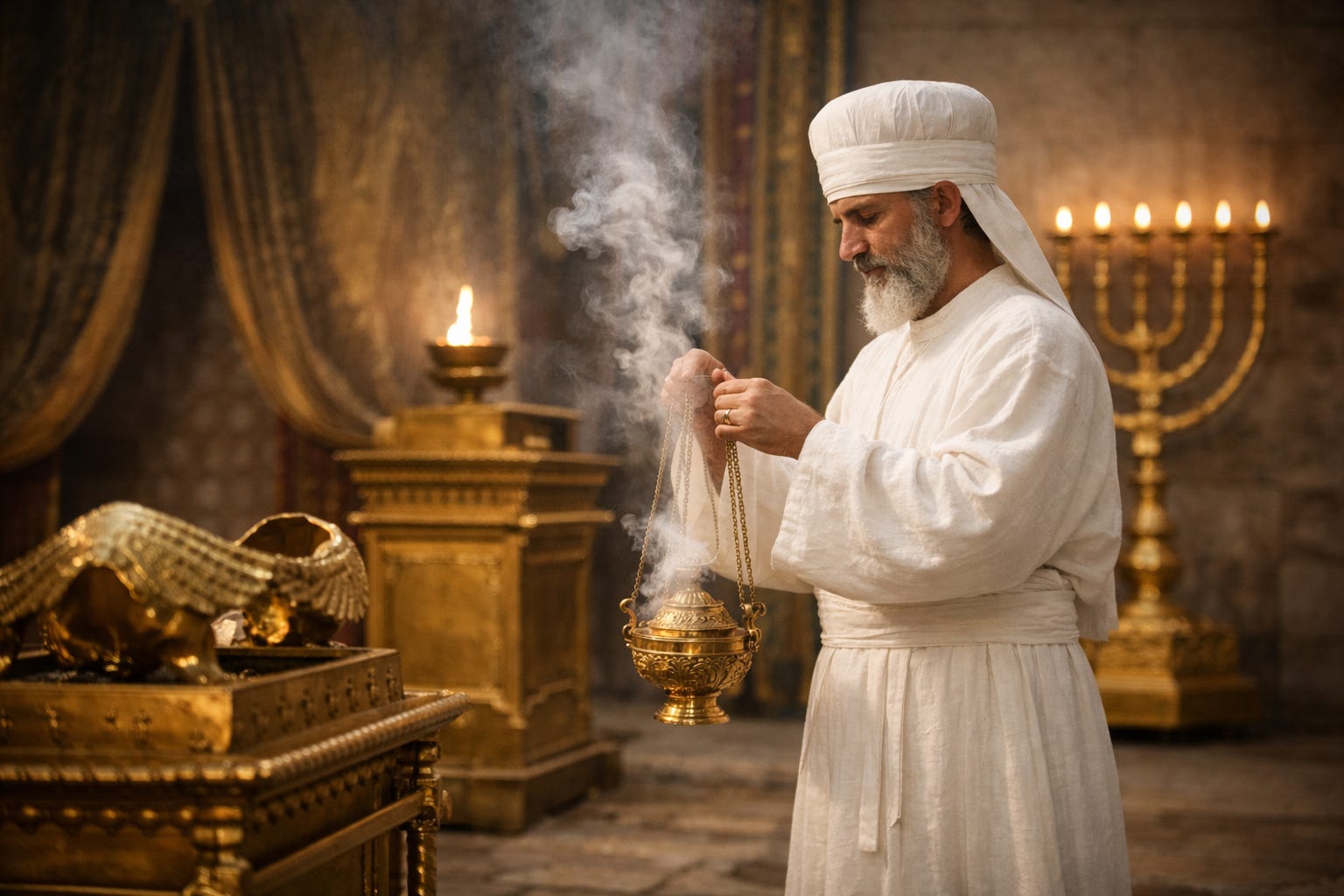
The Day of Atonement (Yom Kippur)
Three specific animals:
One bull (for the High Priest)
Two goats (one sacrificed, one sent away)
One High Priest
One location: the Temple
No meal — mandatory fasting
One single day
Fall observance — September / October
SUMMARY: At Passover, Jesus’ death, burial, and resurrection paid for the sins of God’s people. At Atonement, Jesus cleanses the Temple for the Father’s presence.
The death, burial, and resurrection of Jesus occurred in the Spring of AD 30.
Jesus’ cleansing of a New Temple (His people) occurred in the Fall of AD 70.
The official end of the Old Covenant occurred 40 years after the death, burial, and resurrection of Jesus Christ, when the Jewish Temple in Jerusalem was destroyed during the Jews’ last celebration of Trumpets, Atonement, and Tabernacles (September AD 70).
40 Is the Number for Transition in the Bible

In Scripture, forty never means comfort—it means change.
Israel wandered 40 years before entering the promised land (Num. 14:33–34).
Moses fasted 40 days before YHWH’s covenant words were given (Exod. 34:28).
Elijah walked 40 days to Horeb before hearing God anew (1 Kgs. 19:8).
Jesus fasted 40 days before inaugurating the Kingdom (Matt. 4:2).
Forty is the space between what was and what will be.
So it should not surprise us that from AD 30 (Passover)—the death of Jesus, “the Lamb of God” (John 1:29)—to AD 70 (Atonement)—the destruction of the Old Covenant Temple—there are forty years. This was “the end of the age” Jesus spoke of (Matt. 24:3), not the end of the world, but the end of a covenant system.
Jesus warned that that generation would see it (Matt. 24:34). Hebrews declared the Old Covenant “obsolete and ready to vanish” (Heb. 8:13). And in AD 70, it did—stone by stone (Matt. 24:2).
The end times were not about God abandoning His people, but God moving into them.
In the New Covenant, there is no Temple to visit.
We are the Temple (1 Corinthians 3:16).
No veil to tear—it is already torn (Matthew 27:51).
No repeated sacrifice—Christ finished it (Hebrews 10:12–14).
Forty years marked the transition.
Grace marked the destination.
We don’t live waiting for God to return to a building.
We live as the building He returned to fill.
ATONEMENT - ‘At One’ Moment
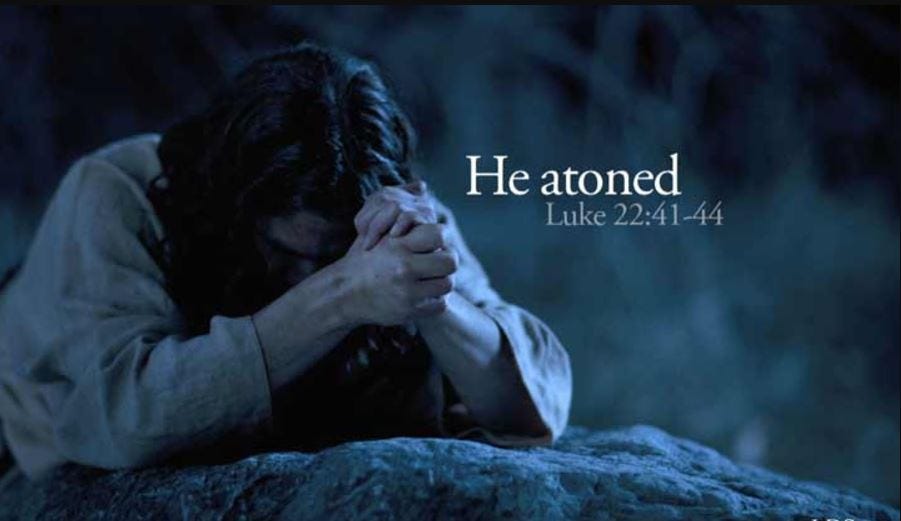
There is a difference between being ‘pardoned’ by the work of Christ and being cleansed to be the Temple of the Living God.
The cross and the resurrection (Passover) pardon sinners.
Atonement makes a cleansed Temple (you) for a holy God.
When William Tyndale translated the Bible into English in the early 1500s, he faced a problem:
English had no single word to capture the rich Hebrew idea of relational reconciliation between God and sinners.
Rather than borrowing a Latin theological term, Tyndale coined a phrase that ordinary people could grasp—’at-one’ (mo)ment.’
The word describes what kippur accomplishes: Separated and forgiven sinners are cleansed by Christ and brought back into oneness with God as His Temple (dwelling place).
This ‘at one’ moment has been accomplished by our Priest (Christ) on the Day of Atonement. Over time, this ‘at-one-(mo)ment” was shortened to atonement, and its relational meaning slowly narrowed into a more technical or legal sense.
Tyndale’s original insight remains powerful: Yom Kippur is not about payment for the penalty for sins (as in Passover): It’s about sinners being made one again with their Creator.
Don’t conflate the Passover and the Atonement. Christ cleanses His people for the ‘indwelling Presence of YHWH,’ but the cleansing occurs at the Atonement, not Passover.
In the Fall of AD 70 (August/September), the LORD, using the Roman army, breached the walls of Jerusalem.
The last Festival of Trumpets in old Israel occurred in Aug/Sept (Tishri 1, AD 70)
The last Day of Atonement in old Israel occurred in Aug/Sept (Tishri 10, AD 70).
The last Feast of Tabernacles in old Israel occurred in Aug/Sept (Tishri 15 AD 70).
The LORD brought down, stone by stone, the Old Temple (Matthew 24), and He (our High Priest) cleansed the New Temple (us, His people), to become the dwelling place of the Creator of the Universe.
Yeshua, the Anointed One, fulfilled the Law of the Festivals - every jot and tittle!
What Christ fulfilled spiritually, AD 70 sealed historically.
We Are the Temple of the Living God

You can’t go to church if you are the church.
You can drive to a building, sit in a pew, sing familiar songs, and listen to a sermon—but none of that is the church.
The church is not brick and mortar, not a zip code, not a budget line, and not a branded program. The church is people in whom God dwells. If the Spirit of God lives in you, then wherever you stand is holy ground.
I should be asking the One in us ‘How do I live?’ more than ‘Where do we meet?’
The dwelling place of God is not a stage or a steeple - it is flesh and blood. You. Me. Us.
When we reduce church to an address or an hour on Sunday, we shrink God and excuse ourselves. We outsource presence. We attend instead of embody.
The presence of God is seen in grace and truth walking around in human skin.
It shows up when forgiveness replaces vengeance, when hospitality defeats fear, when love refuses to dehumanize the neighbor or the enemy.
The world does not need more religious gatherings; it needs more God-filled people who actually reveal God in dark, dying, depressing places.
If the world is starving for hope, it’s not because God is absent - it’s because too many of His people keep Him locked inside buildings He never asked to inhabit.

I like your writings because sometimes I think, "Yeah I probably knew that. But did I really?" Reading this makes me clarify in my own mind the truth of these things and how important it is to know, to understand, and to absorb and apply. Thanks!
That’s another re-read and soak it in. Thank you Wade.