

Never Cancel Another Sinful Human Being
Nebuchadnezzar's conversion in Daniel 4

‘It is my pleasure to tell you about the miraculous signs and wonders that the Most High God has performed for me.’ - Daniel 4:2 (NIV).
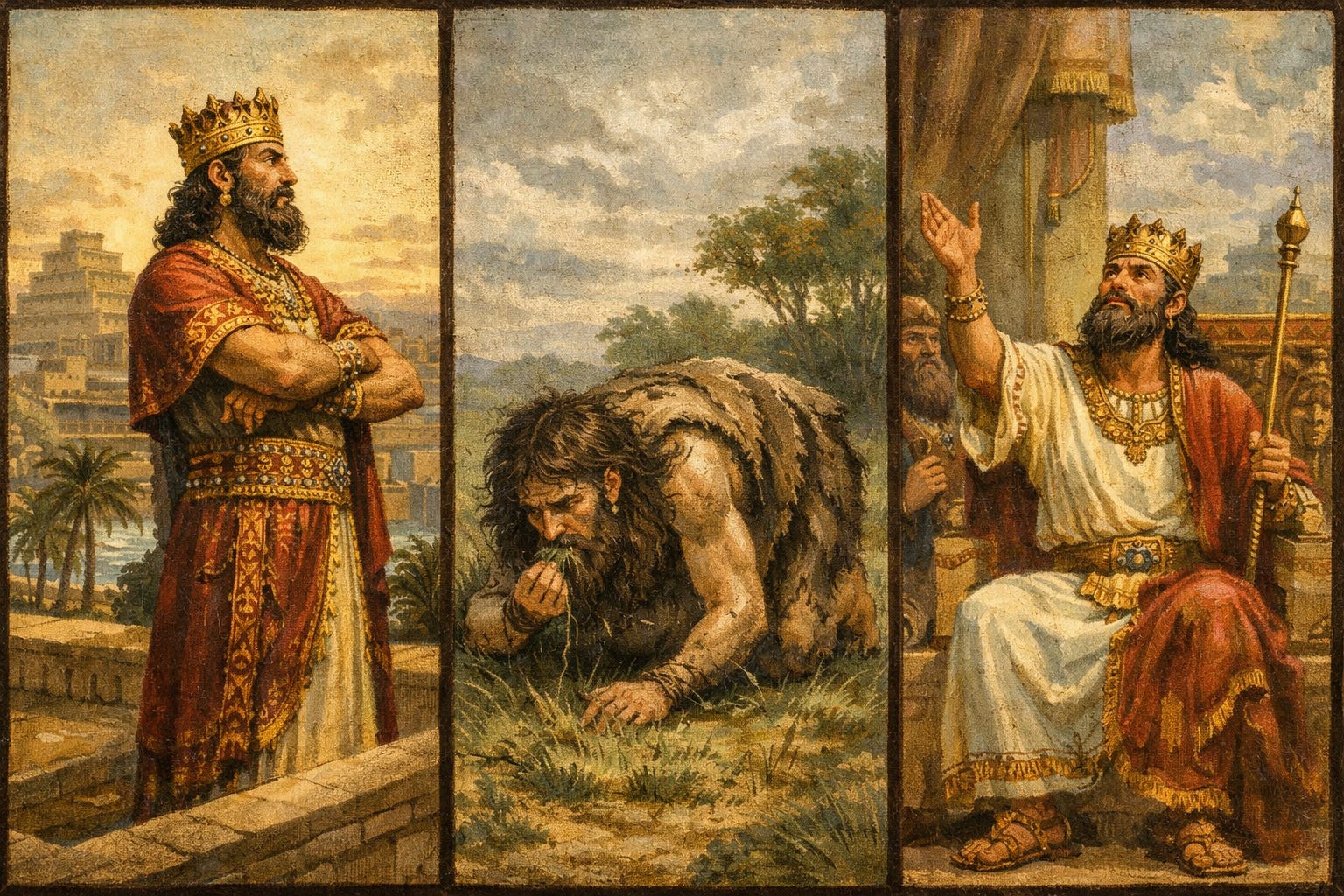
In 609 B.C., a young Babylonian crown prince entered history alongside his father, Nabopolassar.
His name was Nebuchadnezzar.
Nebuchadnezzar formed what historians call ‘The Neo-Babylonian Empire’ (609 to 539 BC).
70 years. A measured span. God keeps time better than Wall Street keeps earnings.
Between 609 and 539 BC, Nebuchadnezzar’s kingom oppressed the entire world.
Yet Nebuchadnezzar himself experienced an astonishing conversion to faith in YHWH (the God of Creation), a conversion recorded in Daniel 4 by Nebuchadnezzar’s own hand.
Once you read Daniel 4, you’ll understand why I never cancel another human being.
The Shadow of the Antichrist
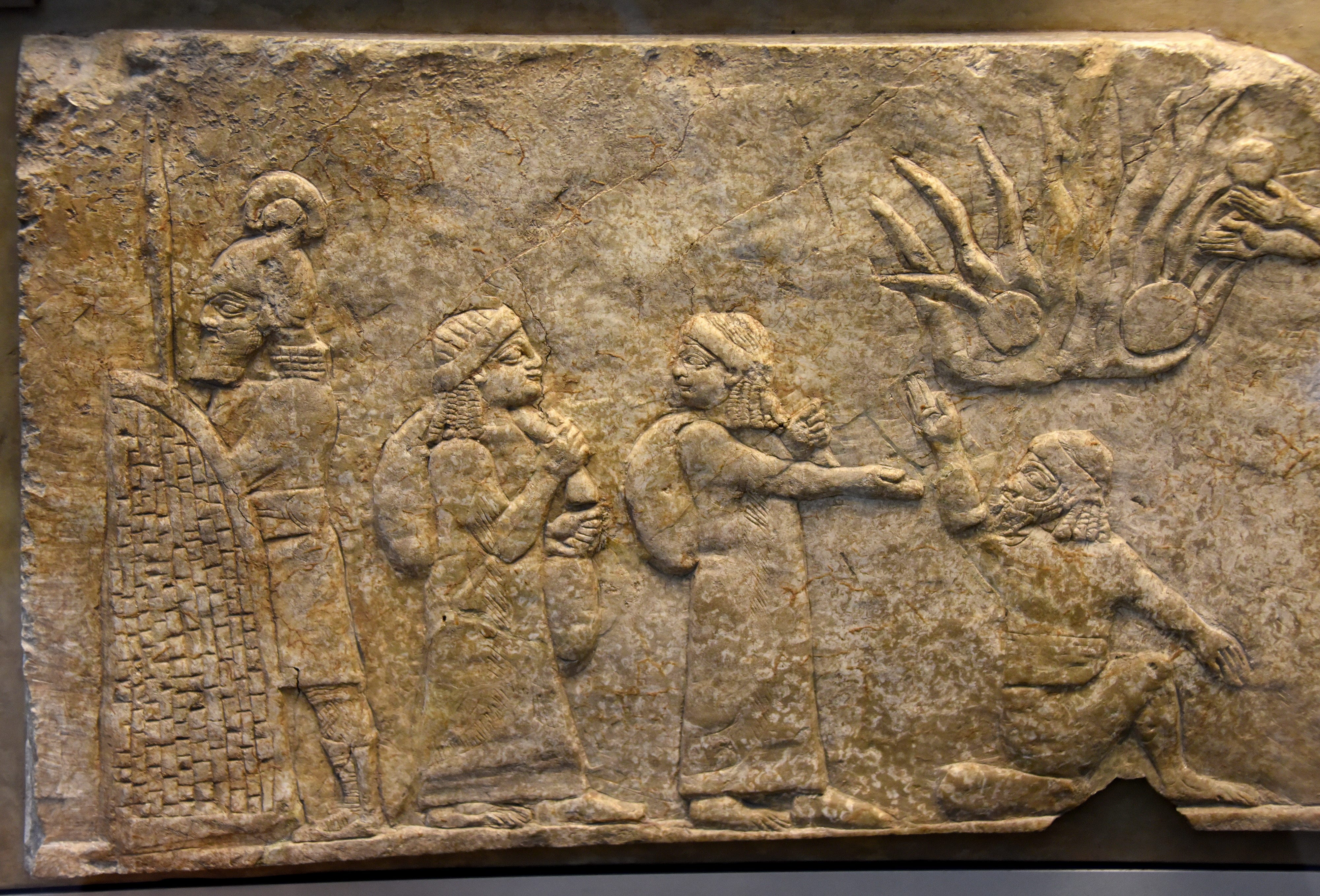
Nebuchadnezzar II ruled Babylon from 605 to 562 B.C.
He was brilliant, ruthless, ambitious, and intoxicated with power.
He destroyed Jerusalem in 586 B.C. (2 Kings 25:8–10).
He burned Solomon’s Temple.
He blinded King Zedekiah—after forcing him to watch the slaughter of his own sons (2 Kings 25:7; Jeremiah 39:6–7).
He deported thousands into exile (2 Kings 24:14–16).
If you want a historical embodiment of the ‘spirit of antichrist’ - a ruler who exalts himself above God (cf. 2 Thessalonians 2:3–4) - Nebuchadnezzar fits the profile.
In Daniel 3, he builds a ninety-foot-tall golden image and commands the world to bow (Daniel 3:1–6).
Worship the image or burn in the furnace.
Sound familiar?
Political absolutism. Religious coercion. Self-deification.
Babylon was not merely a city. It was a system.
Ride enthroned. Power weaponized. God mocked.
If social media had existed in 586 B.C., Nebuchadnezzar would have been permanently canceled.
Nebuchadnezzar’s Crimes of 586 B.C.
Let’s not sanitize Nebuchadnezzar
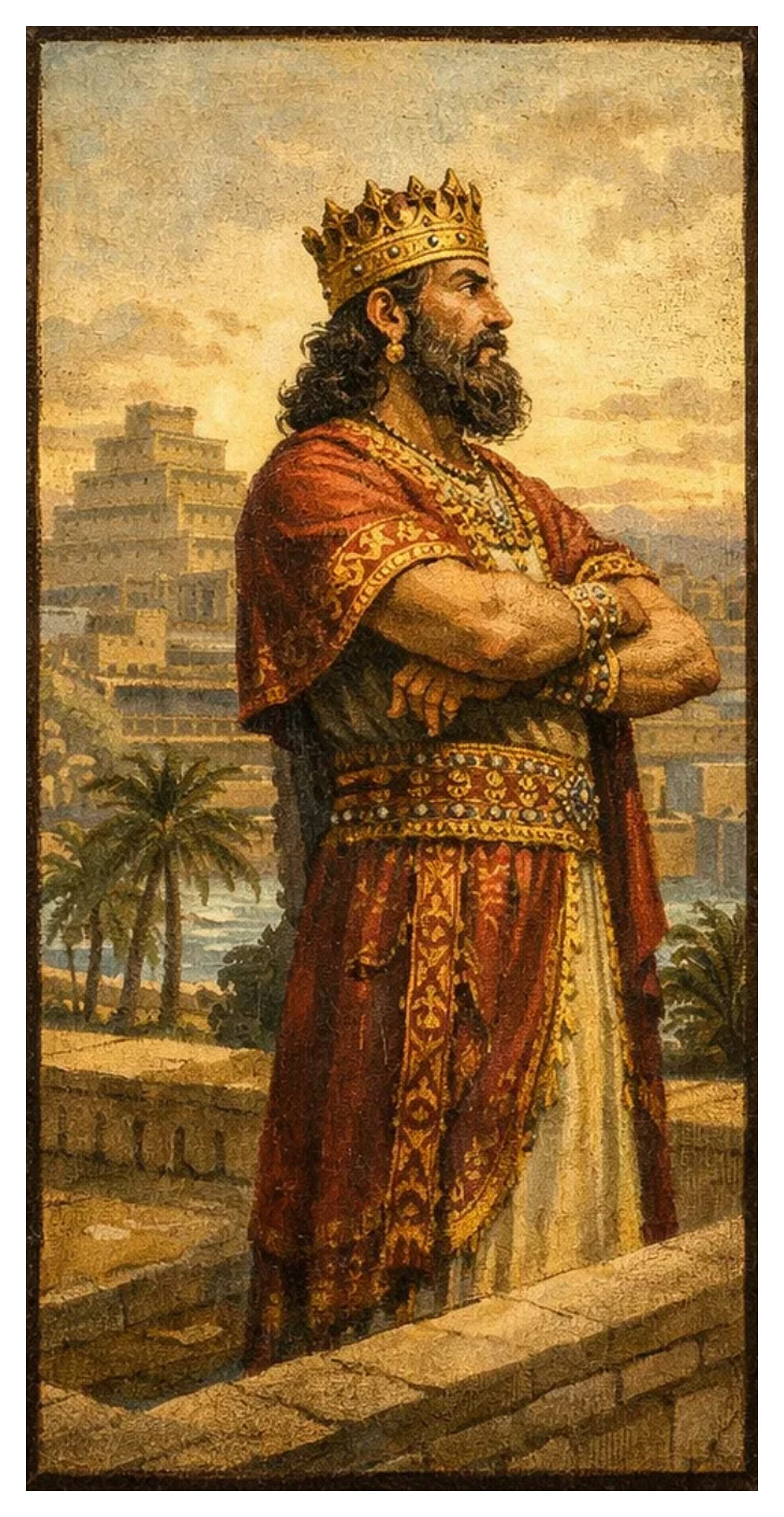
Zedekiah, Judah’s final king, tried to flee Jerusalem during Babylon’s siege. He was captured and brought before Nebuchadnezzar at Riblah.
Scripture says:
‘They slaughtered Zedekia’s sons before his eyes, and put out the eyes of Zedekiah, and bound him with bronze fetters and brought him to Babylon.’ (2 Kings 25:7)
That was the last thing King Zedekiah ever saw.
The Temple burned (2 Kings 25:9).
The walls were broken down (2 Kings 25:10).
The leadership executed (Jeremiah 52:10).
It was the end of an era.
Judgment had come.
Nebuchadnezzar was God’s instrument (Jeremiah 27:6), but he was no saint. He was violent, arrogant, imperial, and cruel.
If you’re looking for someone beyond redemption, he’s your man.
Arrogance in All Becomes a Future Individual Fall
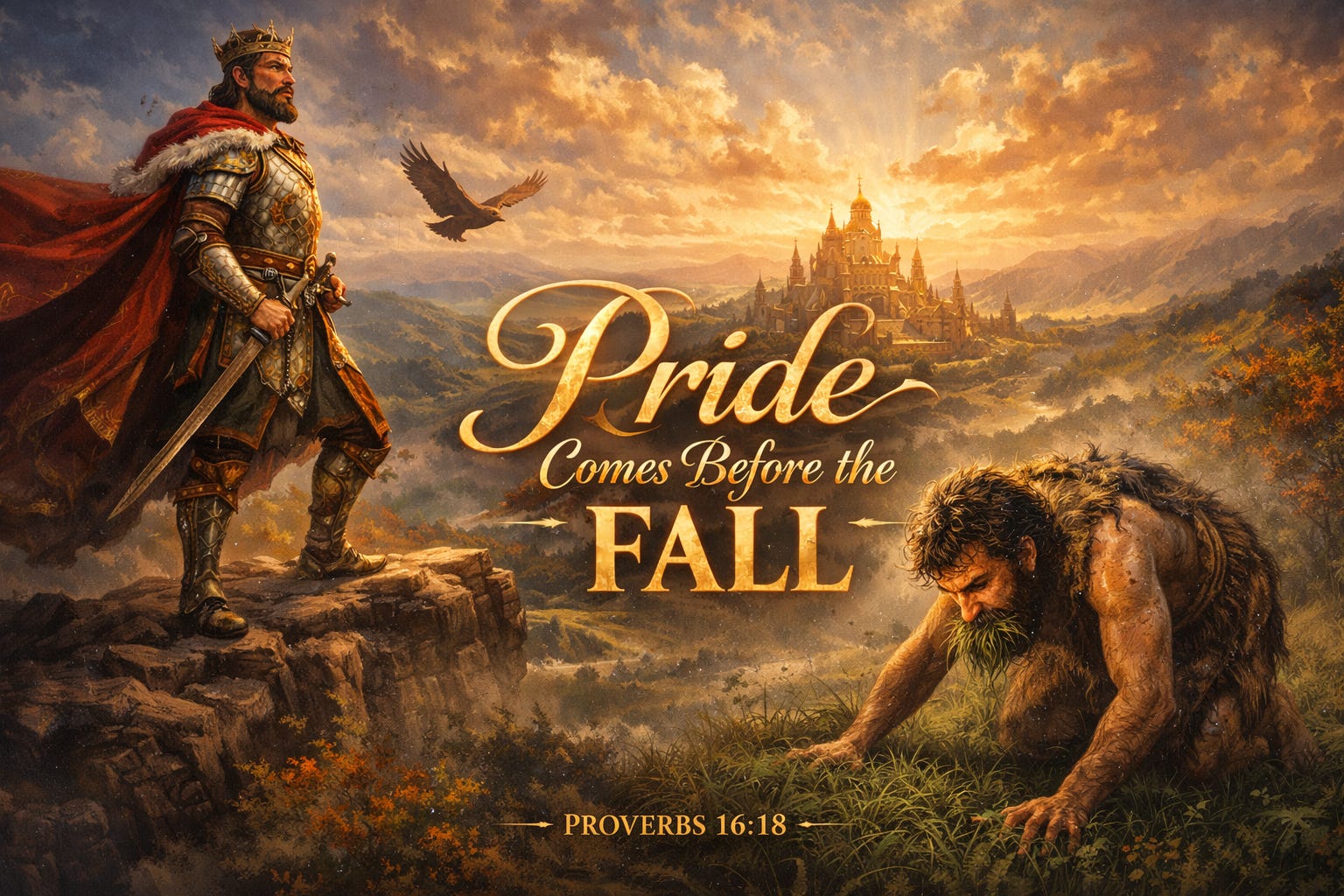
Daniel 4 gives us something remarkable: Nebuchadnezzar’s own testimony.
Not Daniel’s words about Nebuchadnezzar.
Nebuchadnezzar’s words about himself.
He recounts a dream of a great tree—symbolizing his empire—cut down by divine decree (Daniel 4:10–17). Daniel interprets it plainly:
‘You will be driven away from mankind… until you recognize that the Most High is ruler over the realm of mankind’ (Daniel 4:25).
Translation?
God resists the proud.
One year later, while walking on the roof of his royal palace, Nebuchadnezzar says:
“Is this not Babylon the great, which I myself have built by the might of my power and for the glory of my majesty?” (Daniel 4:30)
That sentence hadn’t finished echoing when heaven answered.
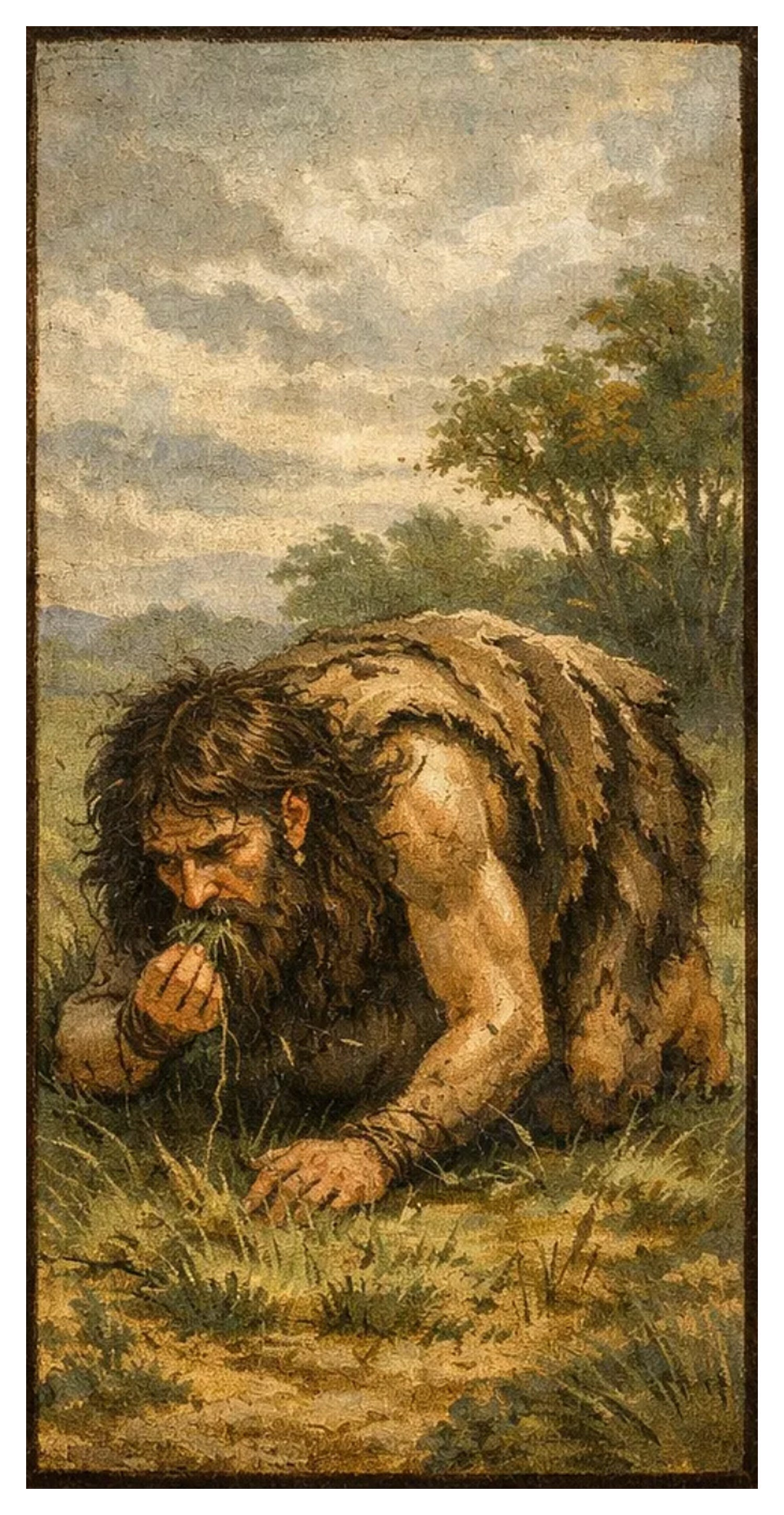
He lost his sanity.
He lived like an animal.
His hair grew like eagles’ feathers.
His nails are like birds’ claws (Daniel 4:33).
The most powerful man on earth was reduced to madness.
Not canceled.
Humbled.
The Conversion of a King
Here is the miracle.
After ‘seven periods of time’ passed, Nebuchadnezzar writes:
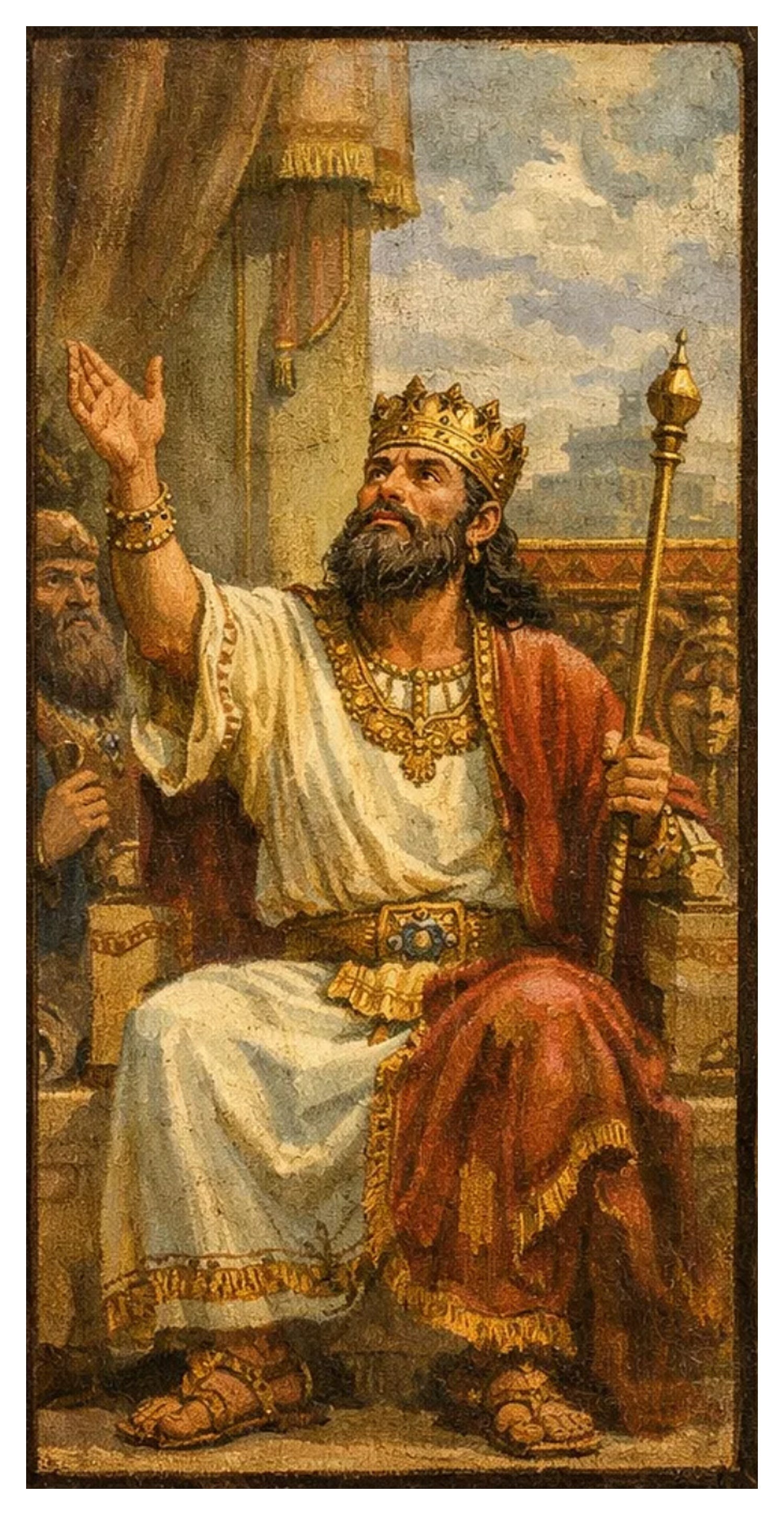
“I, Nebuchadnezzar, raised my eyes toward heaven, and my reason returned to me, and I blessed the Most High and praised and honored Him who lives forever.” (Daniel 4:34)
He continues:
‘All the inhabitants of the earth are accounted as nothing, but He does according to His will… and no one can ward off His hand or say to Him, ‘What have You done?’’ (Daniel 4:35)
That is not the language of tyranny.
That is the language of surrender.
This pagan emperor—destroyer of Jerusalem, builder of idols, persecutor of saints—publicly confessed the sovereignty of YHWH.
Daniel 4 ends with these words:
‘Now I, Nebuchadnezzar, praise, exalt and honor the King of heaven, for all His works are true and His ways just, and He is able to humble those who walk in pride.’ (Daniel 4:37)
That is not propaganda.
That is repentance.
Why I Will Never Cancel Another Human Being
Because if God can convert Nebuchadnezzar, He can convert anyone.
The man who blinded a king.
The man who burned the Temple.
The man who demanded worship.
Converted.
You see, cancel culture assumes finality.
The gospel assumes possibility.
Canceling someone says, “You are forever defined by your worst moment.”
The cross says, “You can be reborn.”
I am not naive. Actions have consequences. Justice matters. Boundaries matter.
But I refuse to act as though any human being is beyond the reach of grace.
If Nebuchadnezzar were alive today, many would say:
‘He’s irredeemable.’
’He’s toxic.’
’He’s beyond hope.’
But God said, ‘Watch Me.’
Babylon Fell - God Didn’t
In October 539 B.C., Babylon collapsed to the Medes and Persians (Daniel 5), just as Jeremiah predicted seventy years earlier (Jeremiah 25:11–12).
Empires fall.
Systems crumble.
Pride implodes.
But God still saves.
Nebuchadnezzar began as a shadow of the antichrist—self-exalting, coercive, violent.
He ended as a witness to the Most High.
That doesn’t erase 586 B.C.
But it does prove something greater than 586 B.C.
Grace outruns judgment.
So no, I will never cancel another human being.
I will speak the truth.
I will call out what’s evil.
I will defend the oppressed.
But I will always leave room for God to do what only God can do.
After all—
If the King of Babylon can be converted,
who exactly is beyond hope?
