

Munich Mesmerized
Marco Rubio's speech in Munich will be forever remembered and often quoted.

‘With patience a ruler may be persuaded, and a soft tongue will break a bone.’ Proverbs 25:15
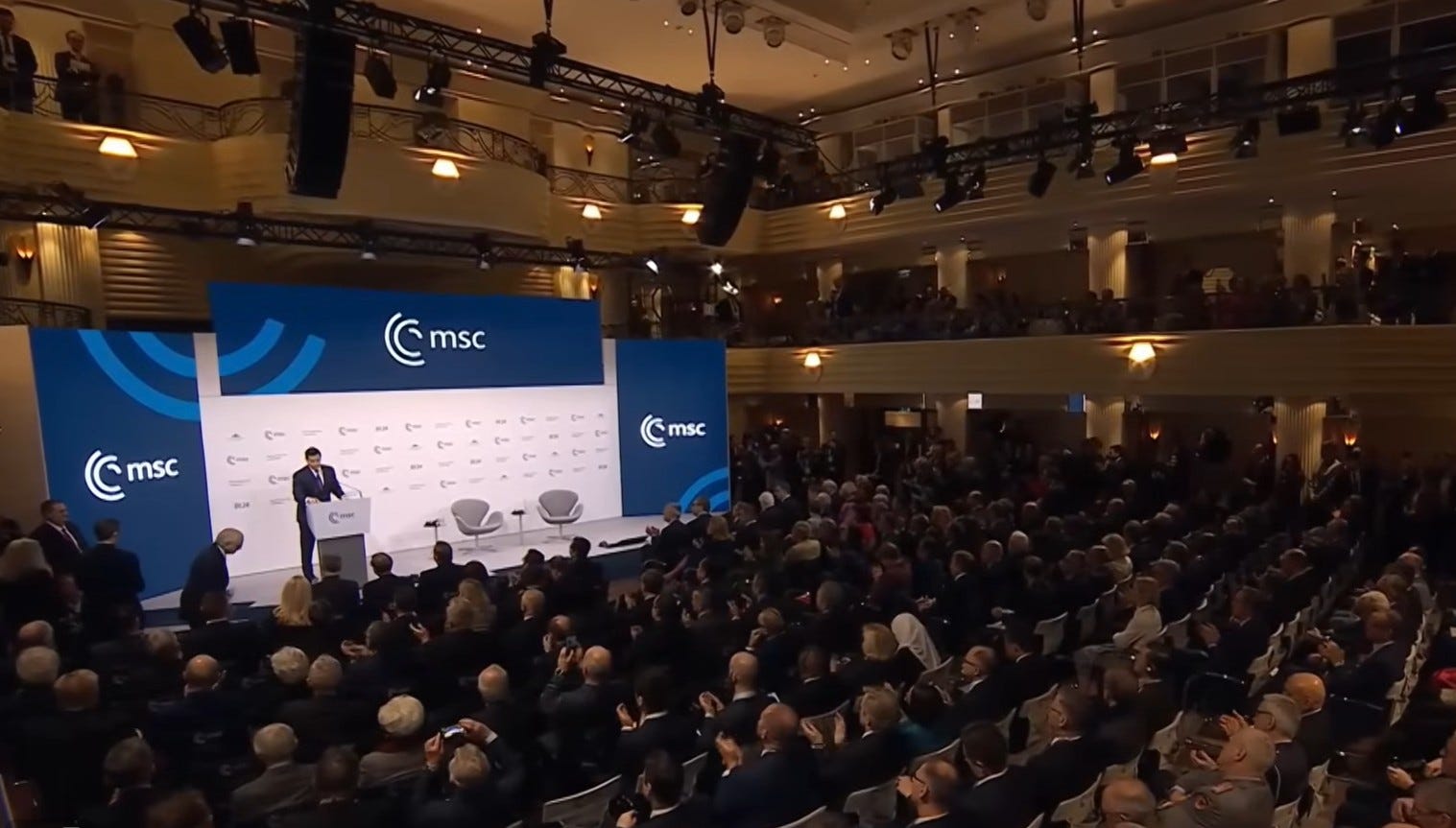
If you do nothing else this week, this month, this year, listen to the speech Marco Rubio gave at the Munich Security Conference on February 14, 2026.
You can read what I write about the speech below, but it is like the difference between enjoying someone’s description of the great recipe for your favorite dish and actually eating it.
The full speech can be watched entirely (22 minutes) below:
My Thoughts on Rubio’s Speech
History has a memory.
And Munich, of all cities, remembers.
In 1938, in that same city, Western leaders chose “peace in our time” over confrontation with evil. Neville Chamberlain waved a paper. Adolf Hitler smiled. The world paid in blood.
After World War II, the West learned—at least for a while—that civilization must be defended, not assumed.
That is why the Munich Security Conference exists.
Founded in 1963 as the International Wehrkunde-Begegnung, it became the premier transatlantic forum for security and the preservation of the Western order. Presidents, prime ministers, foreign ministers, generals - they gather not merely to talk, but to signal the moral direction of the free world.
Over the decades, giants have spoken there:
Henry Kissinger on détente.
Angela Merkel on European stability.
John McCain warning of Russian aggression.
And this week, Marco Rubio stood before that same audience.
What he delivered was not a bureaucratic briefing.
It was a moral argument.
Munich 2026 Is a Test
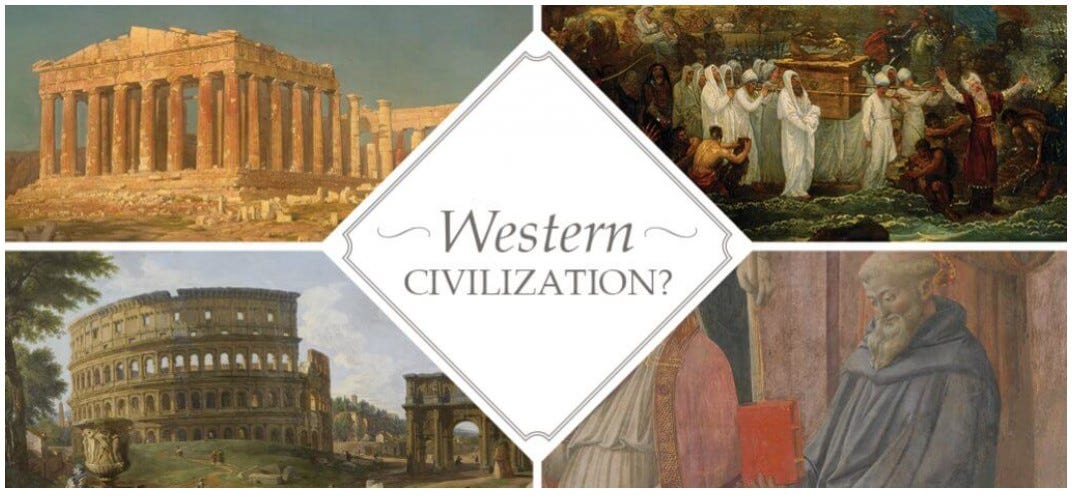
Every generation faces its Munich moment.
Will we defend what made the West the West?
Rubio did something that modern diplomats are often too timid to do: he named the source of Western strength. He spoke openly of Christianity’s shaping influence. He did not apologize for it. He did not whisper it. He did not reduce it to “shared values.”
He stated plainly that the freedoms we cherish—human dignity, ordered liberty, constitutional government—did not fall from the sky. They were born from a worldview.
That is Churchillian.
When Winston Churchill rose in 1946 at Fulton, Missouri, and declared that an ‘Iron Curtain’ had descended across Europe, he was not merely describing geopolitics. He was defending a civilization rooted in Christian moral order and parliamentary government.
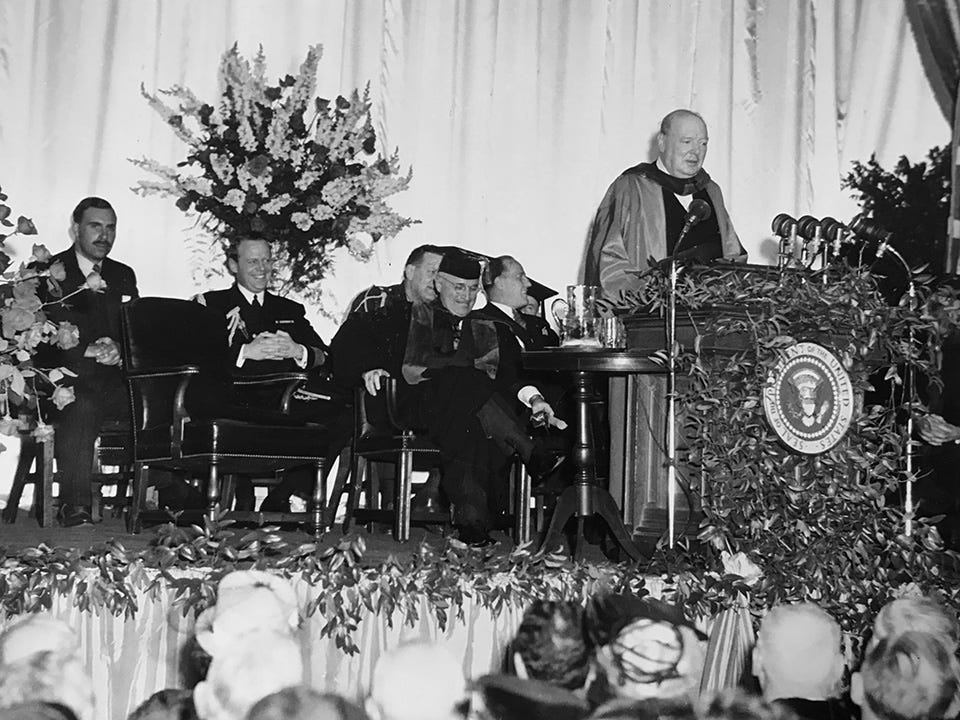
Rubio’s tone carried the same warning as Churchill’s:
Civilizations do not collapse because they are attacked.
They collapse because they forget who they are.
Borders and Sovereignty: The Lincoln Parallel
Rubio also addressed open borders and uncontrolled immigration - not with anger, but with clarity.
A nation without borders is not compassionate.
It is chaotic.
The West, he argued, must retain sovereignty if it wishes to preserve liberty. Immigration policy must serve the national good, not ideological fashion.
This is not cruelty. It is governance.
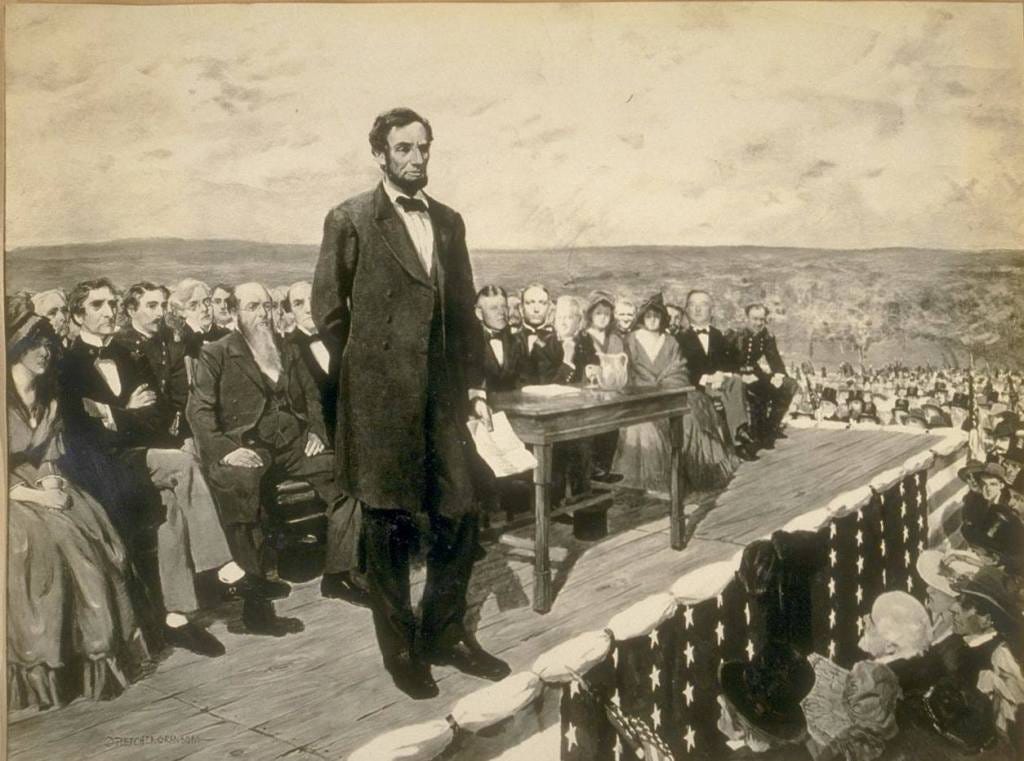
When Abraham Lincoln stood before a divided nation, he insisted that the Union meant something tangible. It had laws. It had structure. It had constitutional boundaries. Liberty required order.
Lincoln’s genius was understanding that compassion without structure dissolves into anarchy.
Rubio’s argument fits that mold: love your neighbor, yes—but do not dismantle the house in which your neighbor must live.
Cicero and the Moral Republic
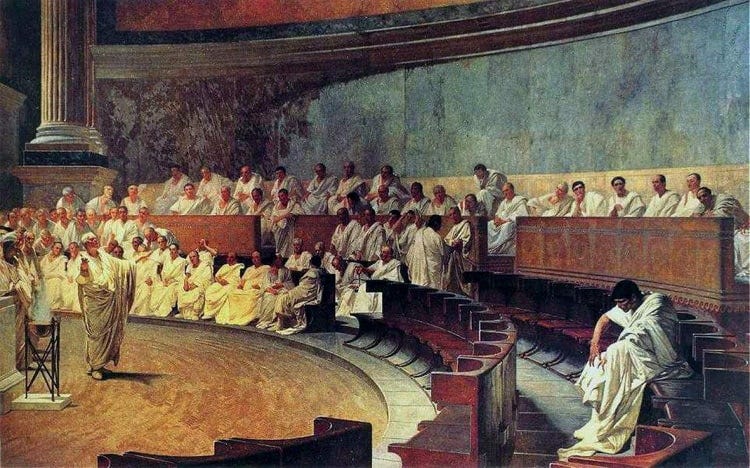

Long before Churchill and Lincoln, there was Cicero.
Cicero warned the Roman Senate that a republic survives only if virtue survives. Corruption of morals precedes the collapse of institutions.
Rubio’s speech echoed that ancient truth. The crisis of the West is not merely military or economic. It is moral.
When Christianity is pushed to the margins, when faith is treated as embarrassment rather than inheritance, when borders dissolve and national identity fragments—the republic weakens.
Rome did not fall in a day.
It eroded.
The Defense of Christianity
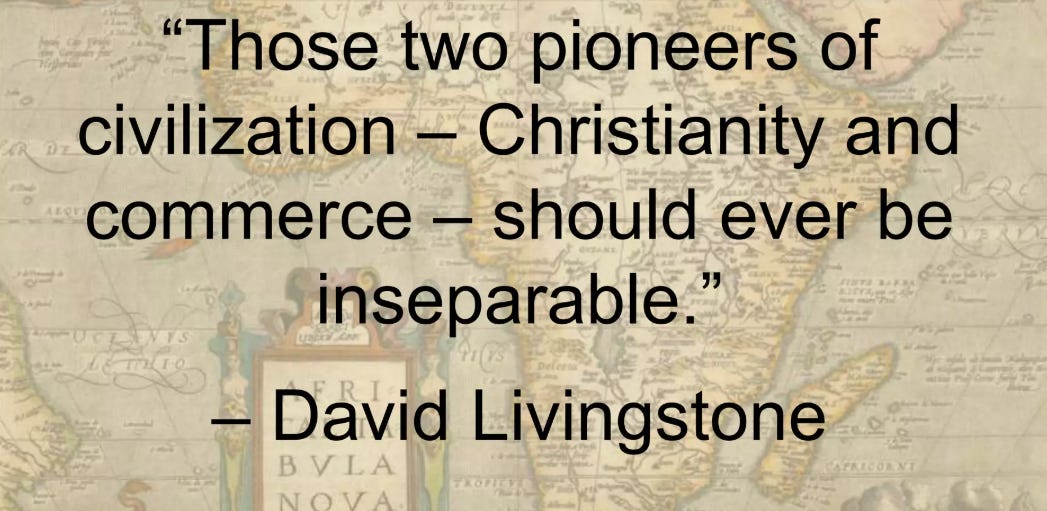
Here is where conservative Christians must pay attention.
Rubio did not argue for theocracy. He argued for acknowledgment.
Western civilization is inseparable from Christianity’s moral framework:
The idea that every human bears dignity.
The belief in objective truth.
The conviction that rights are endowed, not granted.
These are not secular inventions.
They are theological inheritances.
To defend them is not “Christian nationalism.” It is historical literacy.
If we surrender the spiritual roots of the West, we will soon lose its political fruit.
Why This Speech Matters
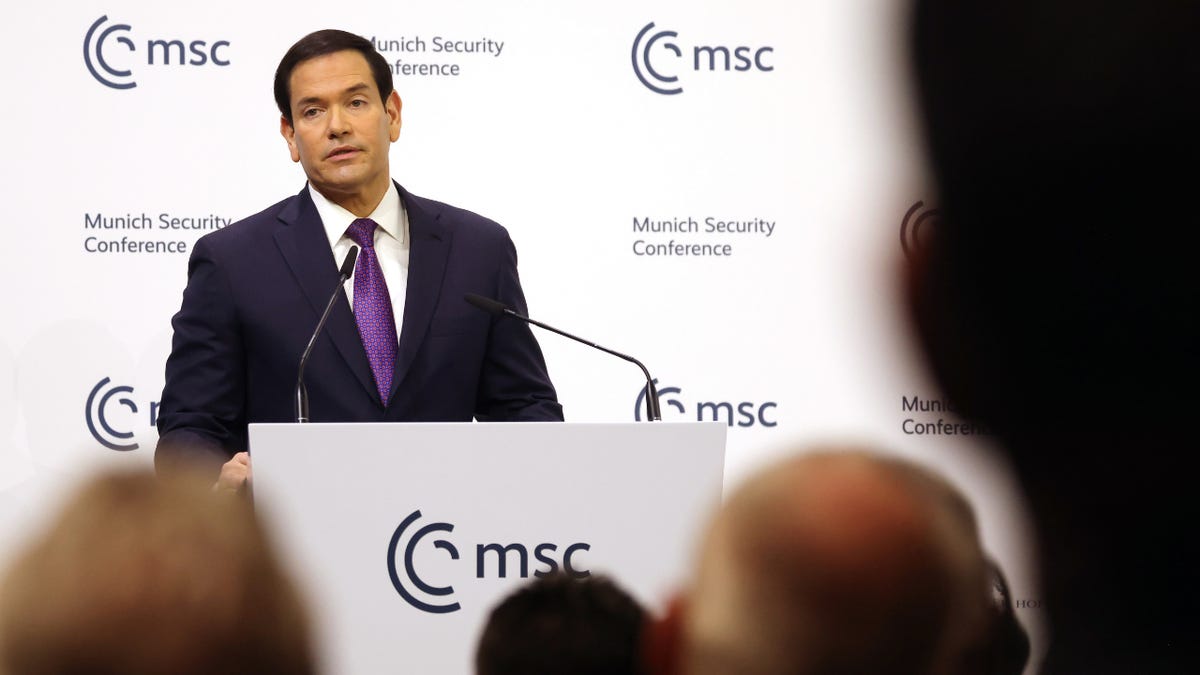
Most modern speeches are transactional.
This one was civilizational.
Churchill rallied a battered Britain.
Lincoln preserved a fragile Union.
Cicero pleaded for a dying republic.
Rubio is speaking at a hinge of history.
The West faces:
Cultural fragmentation
Border instability
Religious amnesia
Authoritarian resurgence
And in Munich—a city that once symbolized appeasement—he chose firmness over flattery.
That symbolism matters.
Munich once represented surrender.
Now it may represent resolve.
A Word to Conservative Christians
The temptation is to retreat.
‘Let politics rot.’
‘Let culture drift.’
‘Let institutions decay.’
‘We’ll just preach the gospel.’
But throughout history, Christians have shaped public life precisely because they believed the gospel changes everything.
Wilberforce ended the slave trade because he believed Christ is Lord.
The American founders grounded liberty in Creator-endowed rights.
The Civil Rights movement sang hymns while demanding justice.
Faith never meant withdrawal.
It meant engagement with courage.
If Rubio’s speech signals anything, it is this: the West is worth defending. Not because it is perfect—but because it uniquely safeguards the freedom to preach Christ, raise families, worship openly, and govern by consent.
You cannot defend religious liberty if you abandon the public square.
Somber Truth

Civilizations die when their Christians grow timid.
Rome did not fall because the barbarians were strong.
It fell because the Romans stopped believing Rome was worth preserving.
Final Thought
History will judge our generation.
Munich has seen appeasement before. It has seen silence before.
But this week, it heard something else: a call to remember who we are.
Churchillian clarity.
Lincolnian resolve.
Ciceronian warning.
And perhaps—just perhaps—the stirring of a people unwilling to surrender the moral architecture that built the West.
Conservative Christians: do not back down.
Engage with conviction. Speak with grace. Vote with wisdom. Love your neighbor.
Defend your nation.
Because if we do not defend Western civilization, someone else will define it.

Of all the European cities we visited during our USAF assignments in Germany, Munich is my favorite. After practically all German cities were leveled during allied bombing raids by the 8th Air Force under the Army Air Corps, Munich decided to do something the other European cities did not. They chose to rebuild the city to what it looked like before the war. Today, Frankfurt and other large cities look as sterile as a dentist’s office, while Munich has character and old world charm.
And from a cultural perspective Today, it is very difficult to reconcile the peace-loving Bavarians in their lederhosen and drindel dresses playing Tubas and performing woodcutter dances, to the atrocities headquartered in Munich and Berchtesgaden during the rise of Hitler and his Brownshirts.
After 4 years in Germany, I came away with the sense that many of the German people were just as victimized by Hitler’s demonic lust for power as the rest of Europe was, as well as the allied nations who came to their rescue.
His speech was superb!