

Gifting, Not Gender
My defense of women is in the Baptist tradition of Isaac Backus and John Leland.

‘In Christ, there is neither male nor female…’ - Galatians 3:28.
‘Brothers and sisters, think of what you were when you were called’ - I Corinthians 1:26.
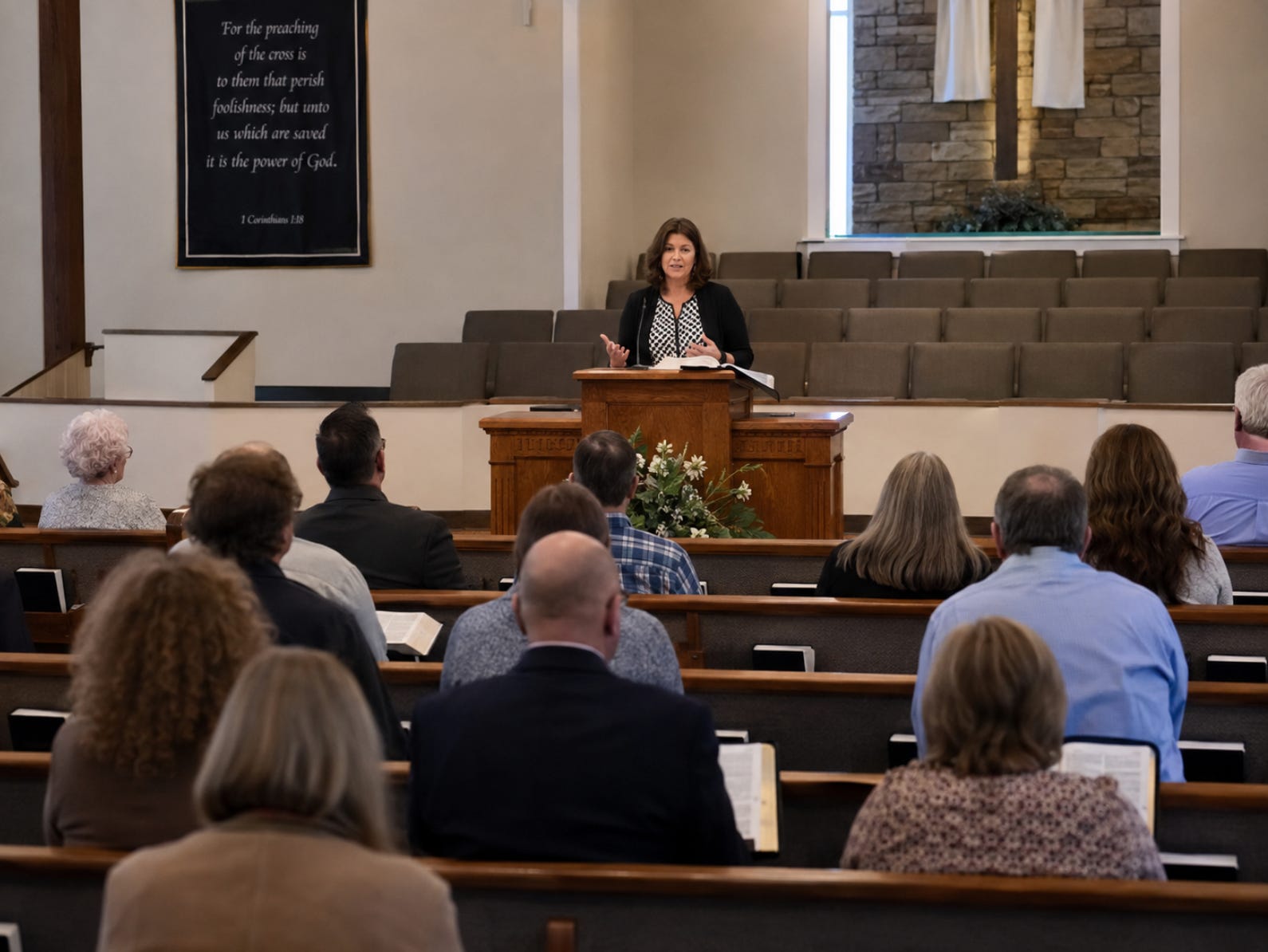
The present controversy over women in the Southern Baptist Convention is usually framed as a contest between modern cultural accommodation and historic Baptist orthodoxy.
That framing is historically shallow.
My conviction that gifted women should be free to pray, prophesy, teach, exhort, administer, evangelize, and proclaim the gospel in the gathered church does not arise from a desire to make the church conform to modern culture.
My principles arise from a belief in the infallible Bible and historic Baptist conviction:
Jesus Christ, not a convention, pastor, or institution, is LORD of His Bride, the Church.
No religious institution or leader has the authority to confiscate a gift that Christ has given to a member of His body. No committee can declare spiritual contraband what the Holy Spirit has sovereignly distributed. No human confession can be stretched beyond its words to create a centralized system of control over autonomous churches.
In this respect, I stand in the historic Baptist tradition of Isaac Backus (1724-1806) and John Leland (1754-1841)
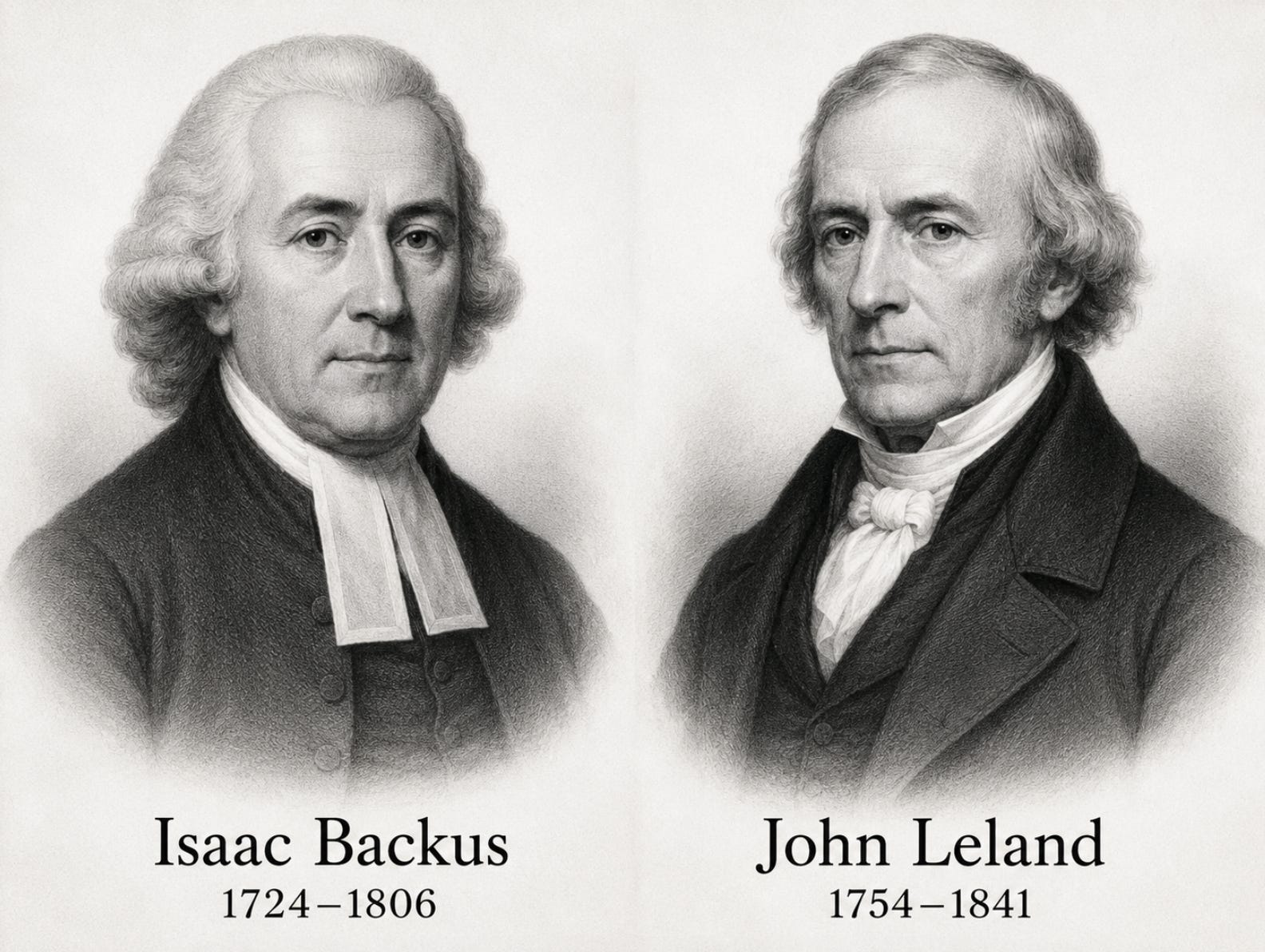
Backus and Leland were 18th-century Baptist leaders and theologians who lived out Baptist biblical principles consistent with my principles for gifted women in church leadership.
They opposed the religious establishment of their day because it placed human power between God and the biblical New Covenant and Christ’s authority.
In like manner, I oppose the attempt of Southern Baptist institutional leaders to establish denominational control over the gifts of women in local churches precisely because it violates Christ’s commands and New Covenant principles.
Isaac Backus and the Freedom of Christ’s Church
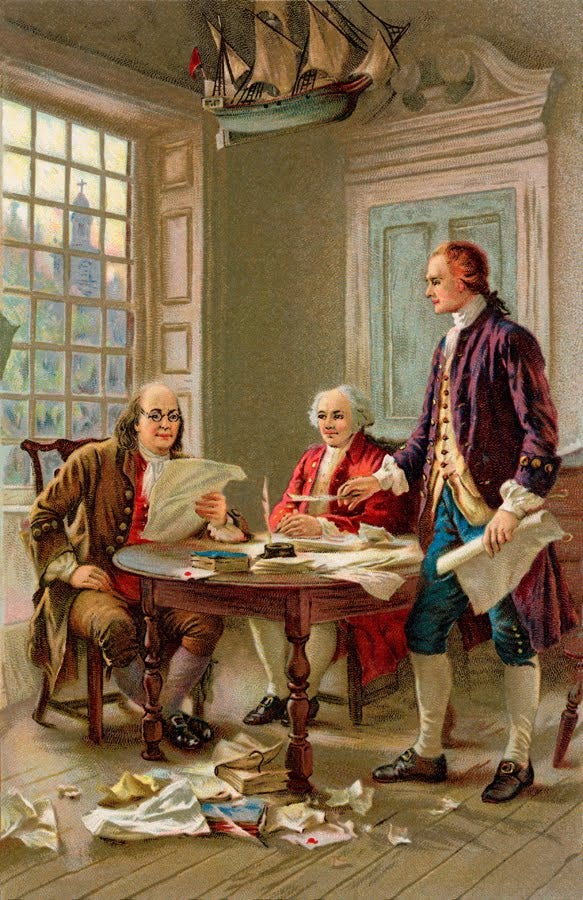
Isaac Backus was born in Connecticut in 1724 and converted during the Great Awakening. He eventually became a Baptist pastor, historian, evangelist, and the leading New England Baptist advocate of religious liberty. As an agent of the Warren Association, he collected the grievances of persecuted Baptists, challenged compulsory religious taxation, and carried the Baptist case to representatives of the Continental Congress in Philadelphia in 1774. [1]
Isaac Backus did not write the First Amendment of the Constitution of the United States, but he was one of the most important Baptist architects of the religious-liberty principles that the First Amendment ultimately placed into constitutional law
Backus understood something many modern denominational leaders seem to have forgotten:
Coercion does not cease to be coercion merely because religious men are doing it.
In his 1773 Appeal to the Public for Religious Liberty, Backus attacked a system in which the civil establishment determined which ministers were legitimate and forced citizens to support them.
Under that arrangement, he wrote, the government empowered approved ministers to forbid the improvement of gifts Christ had given to other believers in His Body who did not conform to the authorized religious system of the day. [2]
Backus’ phrase deserves our attention:
To forbid the improvement of gifts Christ has given.
Backus saw that institutional religion naturally attempts to regulate divine gifting.
Those inside the approved structure define legitimate ministry, certify approved ministers, and suppress expressions of spiritual life that fall outside their system.
The argument sounds remarkably contemporary.
The current effort to impose a universal prohibition against women performing ‘the function of preaching to the assembly’ follows the same institutional instinct. A denominational majority seeks to define, from above, what every cooperating congregation must believe about the exercise of gifts within its own assembly.
The issue is larger than whether a woman may be called a pastor.
The issue is whether Christ distributes His gifts or whether a convention does.
Backus answered that question by insisting that Christ’s kingdom is not governed through the coercive machinery of human establishments. ‘Now who can hear Christ declare, that His kingdom is not of this world,’ he asked, ‘and yet believe that this blending of church and state together can be pleasing to Him?’ [3]
The modern SBC is not the colonial government of Massachusetts. It cannot imprison dissenters or seize their farms for unpaid religious taxes. But the underlying temptation is similar:
To make institutional conformity the test of Christian legitimacy.
Backus resisted that temptation because he believed that Christ alone possesses legislative authority over His church.
Backus, Congregational Participation, and Women Who Prophesy
Backus’s massive History of New England contains a revealing discussion of Christian prophecy and congregational participation.
Writing about the church at Plymouth, Backus explained that its members had learned from the English Separatists that ‘the church was the school wherein Christ trained up his ministers.’ [4]
Ministry was not the private possession of an educated clerical caste.
The congregation itself was the setting in which gifts were recognized, exercised, tested, and developed.
Backus then reproduced an extended argument from John Robinson, the pastor of the Pilgrim congregation at Leiden. Robinson contended from 1 Corinthians 14 that prophecy was not confined to ‘ordained officers.’ It included the ordinary work of edification, exhortation, and comfort performed by spiritually gifted believers. [5]
Robinson distinguished ordinary congregational prophecy from extraordinary inspiration. In doing so, he acknowledged that Scripture records women who spoke under divine inspiration:
‘Women immediately and extraordinarily inspired might speak without restraint,’ citing Miriam, Deborah, and Anna. [6]
Backus chose to preserve this discussion within his Baptist history.
He placed it in a section commending a vision of the church in which gifts were not monopolized by officers and in which the dangers of clerical domination were openly recognized.
Robinson warned that many evils had arisen from church officers' arrogating all to themselves.’ [7]
Backus included that warning approvingly because it served his larger argument: Christ’s church must never become the private estate of a ministerial class.
Backus’ concern is central to the the modern SBC ‘function of pastor’ debate.
When ‘preaching’ is defined as a function inherently belonging to a male pastoral office, every act of public biblical proclamation is gradually absorbed into the office.
The gift of prophecy becomes an institutional possession.
What was once understood as the ministry of the Word exercised by Spirit-gifted believers becomes the exclusive function of an officially recognized priestly class.
Historically, Baptists have resisted that kind of clericalism.
The 1689 Baptist Confession itself stated that although pastors were obligated to preach by virtue of their office, ‘the work of preaching the Word is not so peculiarly confined to them’ that other persons, gifted and fitted by the Holy Spirit and approved by the church, could not and should not perform it. [8]
The confession did not say that every person who preaches thereby occupies the pastoral office. It distinguished office from gift and obligation from permission.
That distinction is the heart of my position for gifted women preaching to the assembly.
A woman who teaches Scripture has not necessarily assumed pastoral office.
A woman who proclaims the gospel has not necessarily become ‘the pastor.’ A woman who exhorts the congregation has not usurped Christ’s headship.
She may simply be doing what the Holy Spirit has gifted her to do.
Elizabeth Backus and the Spiritual Voice of Women
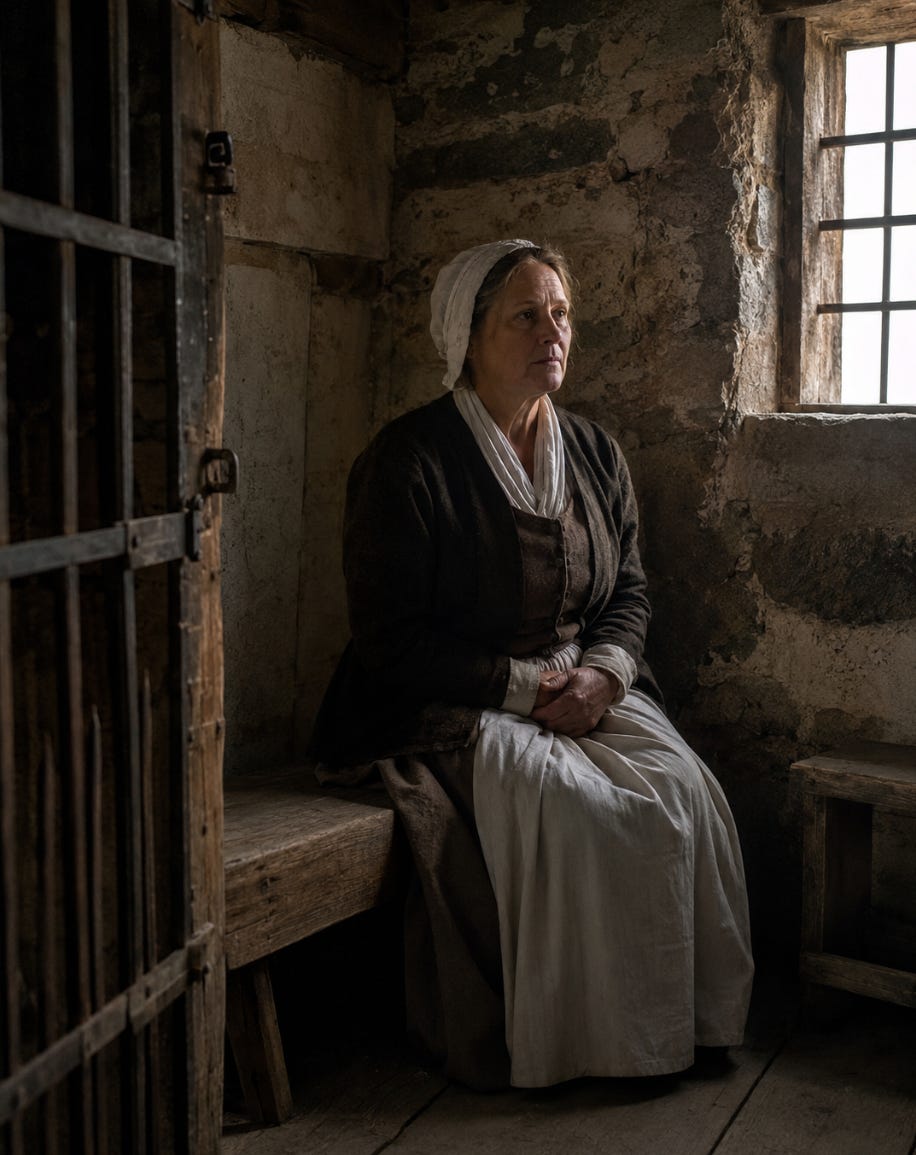
Isaac Backus’s own life was profoundly shaped by his mother, Elizabeth Backus, a spiritually strong woman.
