

Effectual Atonement
Christ saves you and your faith in Him is evidence that He saved you at the cross.
The marvel of heaven and earth is that God saved me at Christ’s resurrection before daylight, Sunday, April 9, AD 30. By God’s grace in Christ’s life, death, and resurrection, I am saved.

I have been asked more than once, ‘Which biblical doctrine do you deem the most important in evangelicalism?’
The doctrine of ATONEMENT is my answer.
I have several friends - Ron Joelson, Paul Young, Sarah Stewart, Franklin Graham - to name a few - who disagree with my view, but we remain dear friends in Christ.
Below, I explain my view of the biblical doctrine of atonement, but your acceptance of my interpretation is never a requirement for our Christian friendship.
The English word ‘atonement’ originates from the Middle English phrase at one (mo)ment, which signified reconciliation or harmony between estranged parties. It evolved into a term denoting the restoration of a right relationship with God.
In the Hebrew Bible, it primarily translates the root kāpar (or kippur in noun form), meaning ‘to cover’ or ‘to wipe away’ sin to enable reconciliation with God.
In the Greek Septuagint and New Testament, related concepts are rendered with terms like exilasmos (expiation) and hilastērion (propitiation or mercy seat), emphasizing satisfaction or covering of divine wrath through sacrifice.
William Tyndale, the 16th-century English Bible translator and reformer, coined the word ‘atonement’ in his 1526 English translation of the New Testament. He formed it from the Middle English phrase ‘at onement’ (e.g., ‘at one moment’), meaning sinners are reconciled and made ‘at one’ with God through the work of Christ in His life, death, and resurrection. Atonement conveys the idea of restoring harmony between sinners and a holy God by covering (or removing) sin,
While earlier writers like John Wycliffe used words like expiation and propitiation in the 1300s, Tyndale fused the concepts into the single theological term - atonement - which those who study the Bible use today.
Christians often disagree over the nature and extent of Christ’s atonement. There are at least seven Christian theories about atonement throughout history.
In this post, I will show you that GOD SAVES SINNERS, and trusting Him, refusing to believe that you, a sinner, can do anything to save yourself, is your hope and security for eternal life.
GOD SAVES SINNERS
I hope to show in this post that belief in a powerful God who saves sinners leads to effectual atonement, meaning, atonement isn’t ‘hopeful,’ it actually happened!
The Shack is a worldwide bestselling novel written by Paul Young to illustrate the powerful love of God for sinners.
Dr. Al Mohler, President of Southern Seminary, wrote a blog entitled The Shack – The Missing Art of Evangelical Discernment, where he said,
‘The Shack rests on the foundation of universal reconciliation… (The) fact is that the Christian church has explicitly identified these teachings as heresy. The obvious question is this: How is it that so many evangelical Christians seem to be drawn not only to this story, but to the theology presented in the narrative — a theology at so many points in conflict with evangelical convictions?’
I respect Dr. Mohler and his theological acumen, but I disagree with his assessment that a person who believes in universal atonement, and thus, universal reconciliation (universalism), is a heretic.
I have the honor of calling Paul Young a friend. He’s been a great source of encouragement to me. After observing Paul Young minister to hundreds of people at the church I pastor, spending precious time with each person individually – never rushing to the next person or glancing at his watch as if he had other important things to do – I asked Paul Young about his philosophy of ministry. He said,
‘Wade, there is no person or moment more important to me than the person before whom I stand at this moment.’
I’ve attempted to model that philosophy of ministry ever since.
Dr. Al Mohler considers himself a five-point Calvinist. He believes God has a distinguishing love for ‘the elect’ and the cross of Christ actually saves the elect. In other words, Dr. Mohler believes the people for whom God sent His Son to redeem are actually delivered (saved) from their sins at the cross by the work of Jesus (see Matthew 1:21).
I understand Dr. Mohler’s theology and happen to agree with it. However, I prefer to call them “the doctrines of grace” because I see these doctrines taught in Scripture.
Paul Young believes the same thing as Dr. Mohler does regarding God’s unconditional love and the power of Christ’s cross. He simply disagrees with Dr. Mohler over “For whom did Christ die?” Paul Young believes Christ died for every sinner who has ever lived or ever will live.
Paul Young told me he is a ‘hopeful universalist.’ He believes that our loving God sent His Son to die for every single sinner without exception. One day God will effectually reconcile every sinner to Himself. Paul uses the term ‘hopeful’ universalism because he understands that the Scriptures speak of judgment, but he is “hopeful” that even in judgment, the love of God will eventually lead the sinner being judged to love Jesus Christ. Paul Young is ‘hopeful’ that the fire of God’s love will eventually and effectually persuade every sinner of God’s love in Christ. So Paul Young believes exactly like Al Mohler when it comes to the unconditional love of God and the efficacy and power of the atonement of Jesus Christ.
Both Paul Young and Al Mohler believe the cross actually reconciles sinners to God.
However, Dr. Al Mohler believes Christ saves selected sinners because God unconditionally loves certain sinners He has chosen to save, and not every sinner without exception. Paul Young believes God unconditionally loves every sinner the same, and Christ’s death reconciles every sinner to God. Again, Dr. Mohler and Paul Young both believe the same thing about God’s effectual love and the power of Christ to save. Where these two men part company is over ‘For whom did Christ die?’
Paul Young and I have discussed Christ’s atonement at length, and after listening to Paul describe the power and efficacy of God’s love in Jesus Christ, I said,
‘Paul, you believe in God’s unconditional love and a powerful cross. You believe that since God intends to save, He will save.’
Young agreed with my assessment. He said, “Wade, you understand my view of God’s unconditional love and the power of the cross to save sinners. Most people hear “hopeful universal reconciliation, ” and they think heresy. I do not believe anyone is saved apart from Christ dying for them.”
Dr. Al Mohler and others believe any expression of hope in universal reconciliation is ‘heresy.’ I would suggest a little humility is in order. The root of the Greek word for humility is ‘knowledge.’
Once Jesus' followers are knowledgeable about the history of Christians disagreeing over the extent of His atonement (e.g., ‘For whom did Christ die?’), the charge of heresy will be put to rest in the hearse of humility.
God’s Everlasting Love to His Elect
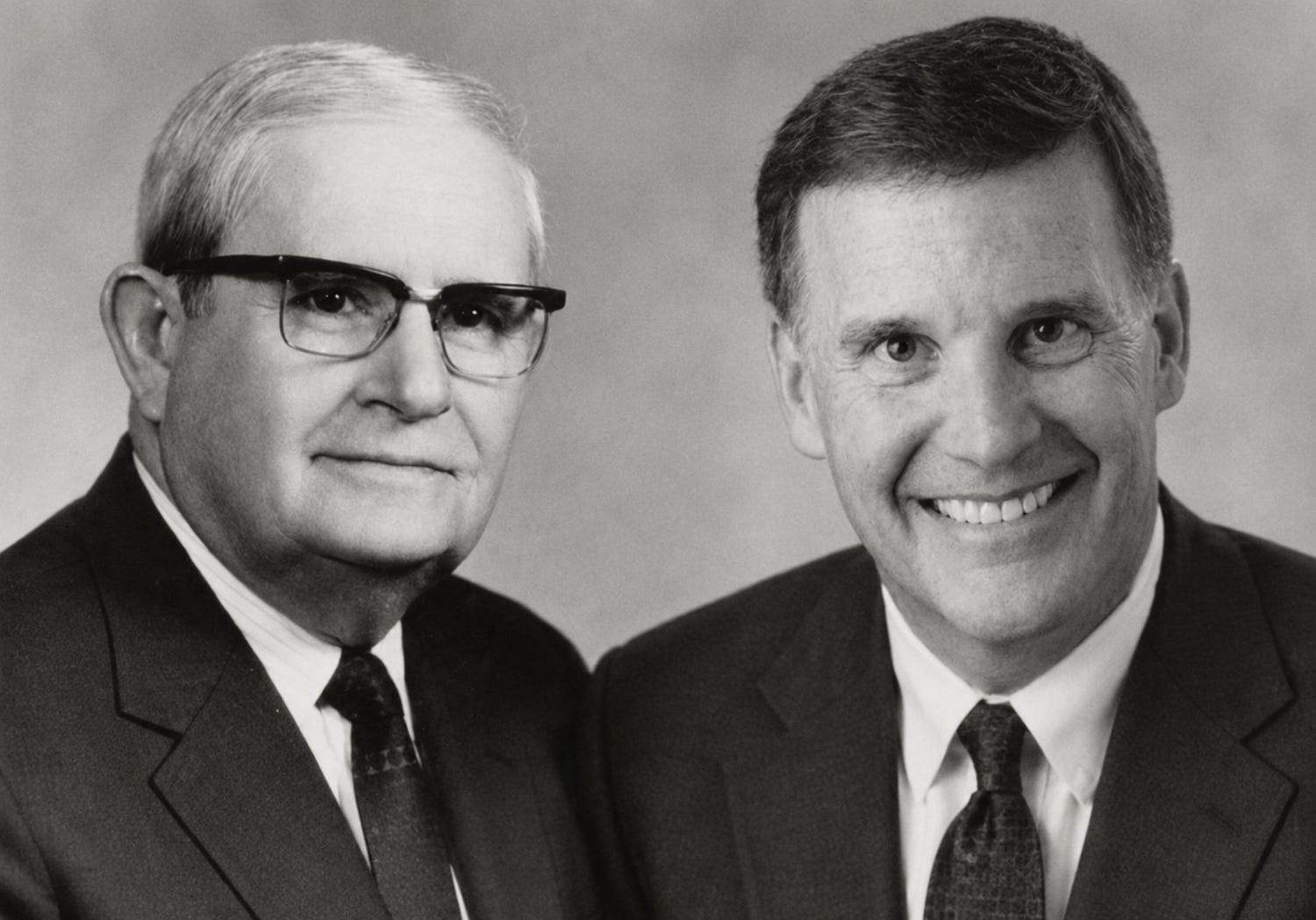
I was twenty years old when I first read God’s Everlasting Love to His Elect by John Gill.
To this day, other than the Bible, no book has impacted my life more. John Gill showed me how God is love, and that the Father’s love is not drawn out by our loveliness nor diminished by our ugliness.
Before reading Gill, I had been infected with the delusion that God had a holy hatred for sinners, and Jesus had a longing love for sinners.
I wrongly believed that the Father desired to punish sinners because of His holy nature of justice, but Jesus offered Himself to the Father as a Substitute for undeserving sinners.
My notion of a bipolar God bothered me, but I just assumed that justice and love were mutually exclusive— until I read Gill. Then I began to see that God is love, and when He moves to save His people, He saves them in love, through love, by love, and for love through Jesus Christ. The Father and the Son are one in motive. “For God so loved the world….” (John 3:16).
I never personally struggled with what some call God’s distinguishing love for His elect. In other words, it never bothered me to believe that God unconditionally loved some sinners and not all sinners. In my mind, since every sinner is the source of his own sin and rebellion, I felt that if God chose to unconditionally love an innumerable company of sinners instead of every individual sinner, who can complain that God is unjust (see Romans 9)?
For me, God graciously and unconditionally lovingly selected sinners from every family, nation, language group, and culture (e.g., ‘the world’), and gave His Son to deliver His people from their sins, while at the same time holding other sinners accountable for their volitional sins, is no problem.
We all make decisions to love certain persons unconditionally (e.g., spouses, children, family, etc). I might say to you, ‘I love the person to whom you are married, but I don’t love your spouse like I love my spouse.’ I unconditionally love my bride. I chose my wife. I didn’t choose yours. I’ve never struggled with believing that God chose to love many sinners, but not all sinners. I figure every sinner deserves nothing good from God, so any sinner who is the recipient of His unconditional love, mercy, and grace is one sinner more than the number of sinners who deserve it. That’s why salvation and the gift of immortal life are acts of God’s grace. Nobody deserves it.
In my journey of Christian faith, I have discovered that not all Christians are as comfortable with God’s distinguishing love as I am. Some believe that God’s love abides upon each and every sinner to the same degree. The idea that God has a distinguishing love for His Bride bothers some Christians immensely.
It bothers Christians like my friend Paul Young, author of The Shack.
And it bothered a Christian named George MacDonald (1824-1905).
George MacDonald (1824-1905) and C.S. Lewis
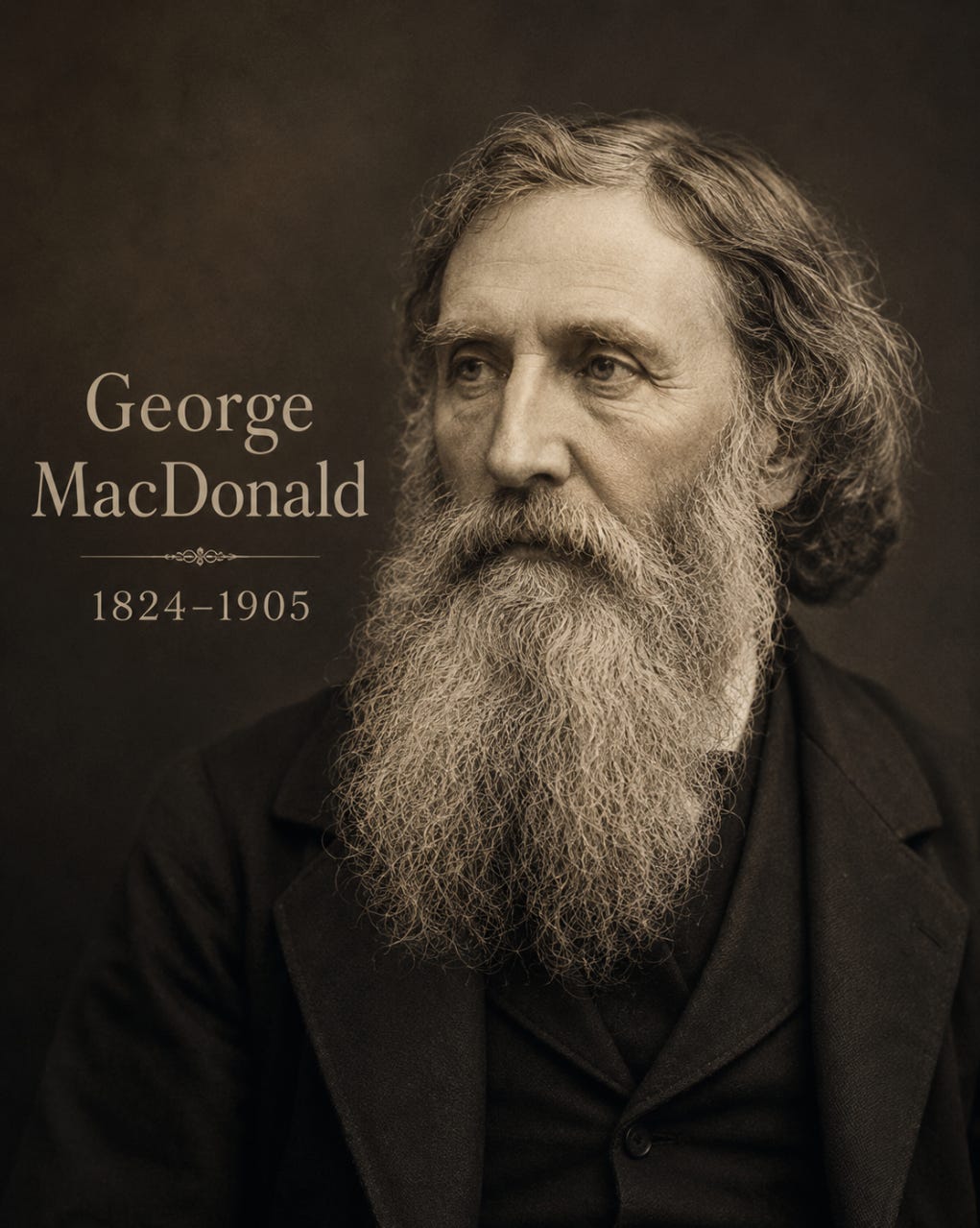
You may have never heard of George MacDonald.
It’s your loss if you have not.
Christian writers and thinkers like C.S. Lewis, G.K. Chesterton, Oswald Chambers, Mark Twain (yes, there are reasons I call Mark Twain a Christian), and many other superb Christian writers revered George MacDonald.
George MacDonald believed in hopeful universal reconciliation, just like Paul Young.
When a Bible teacher first explained the doctrine of predestination to George MacDonald, it is said that George burst into tears. Although the teacher sought to assure George that he was one of the elect, George became very distraught with the idea that God loved some sinners, but not every sinner. He had nightmares.
George grew up and eventually became a Congregational minister. In time, George was asked to leave his Congregational ministry for suggesting that the consuming fire of God’s love would eventually overcome sin and rebellion in every human being. In other words, George MacDonald believed in hopeful reconciliation.
After his pastorate, George MacDonald turned to writing. His influence through writing became enormous. Most American evangelicals have never heard of George MacDonald, but we have read books written by authors George MacDonald mentored.
C.S. Lewis called George MacDonald ‘my master.’ Lewis had picked up a copy of MacDonald’s book Phantastes at a train station bookstall. ‘I began to read,’ says Lewis, ‘and a few hours later I knew that I had crossed a great frontier.’
G.K. Chesterton said MacDonald’s book The Princess and the Goblin ‘made a difference to my whole existence.’
Mark Twain was greatly influenced by George MacDonald, as was the great Christian devotion writer Oswald Chambers, who said, ‘It is a striking indication of the trend and shallowness of the modern reading public that George MacDonald’s books have been so neglected.’
George MacDonald would eventually write many books, but two of them, Robert Falconer and Lilith, show his intense dislike for the idea that God’s saving love is given to some and not to others. C.S. Lewis describes in George MacDonald: An Anthology how MacDonald kept the ‘worthy’ portion of his Scottish Calvinism while renouncing the doctrine of predestination: ‘In the very midst of his intellectual revolt (from Calvinism), MacDonald forces us to see elements of real and perhaps irreplaceable worth in the thing from which he is revolting.’
Don’t gloss over what Lewis is saying about MacDonald.
‘In the midst of rejecting God’s distinguishing love, MacDonald kept his readers focused on the real worth of Calvinism.’
If the ‘real worth’ of Calvinism is not God’s distinguishing love, then what is it?
MacDonald believed in and wrote with a real sense of God’s majesty, sovereignty, and power. MacDonald absolutely believed that God does as He pleases at all times, or else He would not be God.
This, God’s majesty, was the portion of Calvinism that MacDonald deemed worthy.
What MacDonald despised was the belief that God chooses to save some sinners but not all sinners. So George MacDonald believed in hopeful universal reconciliation.
C.S. Lewis never fully adopted George MacDonald’s eschatology of universal reconciliation. However, Lewis did challenge the traditional doctrine of hell, showing how much MacDonald influenced him. Lewis also wrote about hopeful reconciliation in his book The Great Divorce.
In The Great Divorce, Lewis writes of a person named ‘MacDonald’ (coincidence?) who appears as a heavenly guide. MacDonald shows how a person who continually spurns God’s love might spend eternity in total isolation and darkness. Then, a character named ‘Lewis’ challenges the heavenly guide (MacDonald) by reminding him that he (MacDonald) had believed in universal reconciliation while he lived on earth (sound familiar?). MacDonald responds that indeed he believes ‘it is possible that everyone will eventually be saved,’ but ‘we cannot know this with certainty.’ That’s up to God. This is why George MacDonald and C.S. Lewis refer to it as hopeful universal reconciliation.
George MacDonald believed that God, during the judgment of sinners in hell, could eventually and effectually convince every sinner of His love for sinners in Christ Jesus. In time, sinners could freely and volitionally bow their knees to the Lord Jesus Christ, coming to an understanding of God’s love for sinners. In time, according to MacDonald, all of God’s creation could be reconciled to God.
This is precisely what Paul Young hopes for in The Shack.
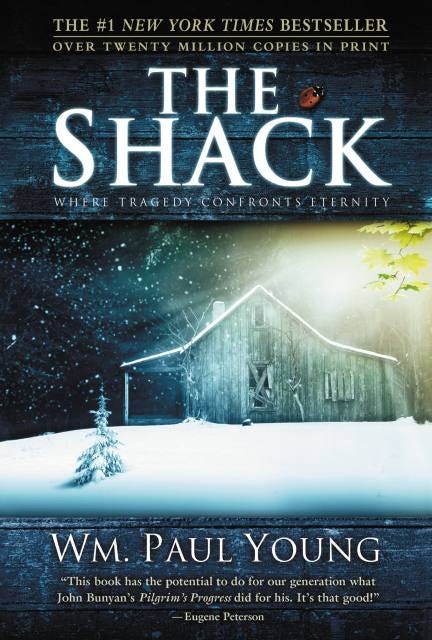
Hopeful universal reconciliation is not heresy. Paul Young, George MacDonald, and other Christians who hope in universal reconciliation believe in a loving God and a powerful cross. The disagreement with men like Al Mohler and me is over the question, ‘For whom did Christ die?’
C.S. Lewis came very close to embracing the universal reconciliation of his master, George MacDonald, but C.S. Lewis is certainly no heretic. Questioning the eternality of hell (as Martin Luther did versus John Calvin), or postulating a hopeful universal reconciliation (as George MacDonald, C.S. Lewis, and Paul Young have done), does not place one outside the boundaries of Christian orthodoxy.
John Piper once tweeted, ‘Goodbye Rob Bell,’ when Rob Bell published Love Wins, a book that questions, but does not deny the existence of an eternal hell. During that same time period, John Piper extolled C.S. Lewis as the most significant influence in his life. Both men, Rob Bell and C.S. Lewis, asked the same theological questions in their writings. C.S. Lewis asked his questions wrapped in a narrative of fantasy, while Rob Bell spelled out his questions in plain English.
John Piper has never tweeted ‘Goodbye C.S. Lewis.’
Could it be that it’s far easier for us to fire the gun of heresy at those we’ve never taken the time to read thoroughly, or if possible, get to know as friends?
If a person chooses to reject the doctrine of God’s distinguishing love and finds comfort in hopeful universal reconciliation, we who follow Jesus might be careful before we charge our fellow believer in Christ with heresy.
Both Calvinism and hopeful universal reconciliation believe in a God of love and an efficacious cross. The difference is over ‘For whom did Christ die?’
The only alternative to denying God’s sovereign, selective love or God’s universal love is to turn God into a weak, impotent deity with fickle love dependent on the performance of His subjects.
A god of fickle love and impotent power isn’t good news. When we make our god as fickle as we are, we have turned the Creator into a person just like us.
Thankfully, God is not like us.
God’s love is an artesian spring that’s not drawn out by loveliness nor diminished by ugliness.
He is love. His love continues. His love never ends. His love can’t end because God continues and He never ends, and God is love (1 John 4:8).
Both Al Mohler and Paul Young believe the same thing about God’s unconditional love and Christ’s effectual death.
Again, for the last time, their difference revolves around, ‘For whom did Christ die?’
Both believe Christ saves every sinner for whom He died.
So do I.

Perhaps I am incapable of perceiving aspects of Scripture that are seen by others, but it really doesn't seem that veiled to me.
God takes no delight in losing any of His human creatures by their being eternally separated from Him. That's why He instituted a path of escape for "ANYONE" who "CHOOSES" to take it but Jesus did not serve as God's accepted substitute sacrifice for "EVERYONE" including those who "CHOOSE" to reject God's offer for "atonement". And the "window of opportunity" is strictly confined to the time that we have in life in this worldly realm prior to our death ("die once, then comes judgment").
All the rest relating to "irresistible grace", "election", and the concept of "those being chosen by God to be saved have nothing to say about it"- they are "destined by God to either be saved or lost", seems to contradict the context of Scripture and the manner in which God's application of grace has always been displayed throughout the Bible.
I don't know the motive for others taking the more "Calvinistic" approach, but it "appears to me" to display the struggle they have in dealing with God's sovereignty vs man's accountability, or "free will". No matter how they struggle to account for the aspect of "we sinners having the free will to choose our own destiny", it cannot be allowed when the concept of "irresistible grace" is applied.
Sorry, Wade, if it appears I am trying to put word in your mouth. This is just the impression I get when viewing such matters and the diverse positions taken by theologians.
Personally, I am not frustrated with this aspect of how some are judged to be unpresentable before the Throne, while others are judged to be "covered in the blood" and clothed in "righteousness" while simultaneously not compromising the "sovereignty" of God and His interaction with His pitiful, human, creatures. His "grace" is undeniably exhibited in His provision for a remedy for all those who choose to accept it, even when we are unworthy to be given that option.
This is one of the few areas in relating to God and how He does things, that I am comfortable with and feel confident that my position is consistent with the doctrines related to salvation, judgement, atonement, and "election". I have no problem in fitting the pieces of this puzzle together.
Thanks for this article Wade. Highly researched. Appreciate your direct, yet humble tone. I know years ago when Drs. Yarnell, Harwood, and others authored a document that reflected a non-Calvinistic Southern Baptist view of the atonement, it was called Pelagian by Dr. Mohler. It was anything but though. Several leaders in the SBC endorsed it (which if Pelagian would make them heretics). A bit disappointed in Dr. Mohler's assessment of the doc. I have removed myself from these so called atonement wars and instead focused on telling others about Jesus/making disciples. But, when I come to a point in scripture, as I preach that deals with the subject, I try to be a bit more humble about it. I know there are Christians throughout Christian history that have debated this subject and we are no where near having the absolute truth on the matter. That truth won't be resolved this side of heaven. Until we all gather around the throne and worship our Lord and Savior, I link arms with fellow believers who differ on this and cooperate to share the good news to a lost and dying world. I am not saying studying this subject is not worth it, I am saying, fighting and dividing is. Thanks again.